PRESIDENT TINUBU, GERMAN CHANCELLOR MERZ TO COLLABORATE ON SECURITY, POWER
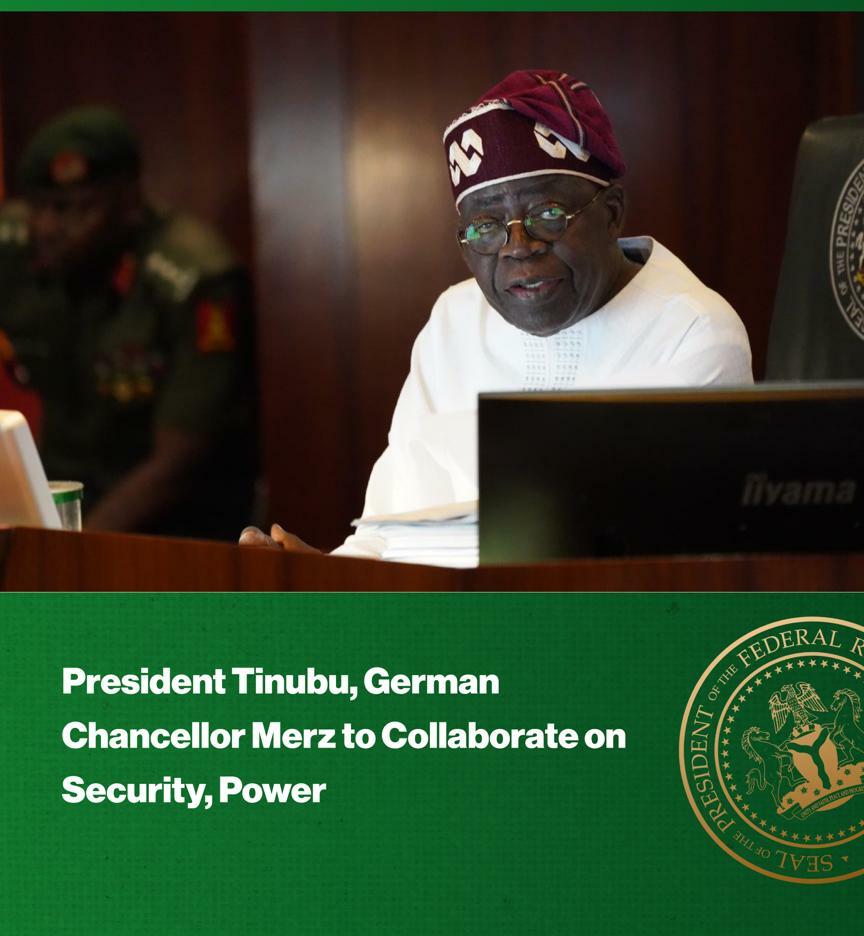
PRESIDENT TINUBU, GERMAN CHANCELLOR MERZ TO COLLABORATE ON SECURITY, POWER
President Bola Ahmed Tinubu and German Chancellor Friedrich Merz have agreed to strengthen bilateral cooperation between Nigeria and Germany, focusing on key areas including security, power transmission, railway infrastructure, cultural exchange and skills development. The commitment was reached during a telephone conversation on Wednesday afternoon, marking a renewed push to enhance ties between the two nations.
The call lasted about nine to ten minutes and was confirmed in a statement by Bayo Onanuga, Special Adviser to the President on Information & Strategy. A central focus of the discussion was Nigeria’s Presidential Power Initiative an ambitious programme aimed at improving the country’s electrical infrastructure. President Tinubu underscored that Nigeria needs additional technical and financial support to strengthen its power transmission network. In response, Chancellor Merz said German engineering firm Siemens is ready to offer technical assistance, while Deutsche Bank is willing to finance parts of the project a partnership seen as a boost to Nigeria’s ongoing energy reforms and efforts to stabilise electricity supply.
Security particularly the worsening situation in the Sahel region of West Africa was another major topic. President Tinubu expressed concern about the deteriorating security situation and called for enhanced cooperation, including intelligence sharing and reconnaissance support. Notably, Tinubu requested the supply of used helicopters from Germany to assist with intelligence and surveillance operations across the troubled Sahel corridor, highlighting the complexity of regional security challenges that cross national borders. Beyond security and energy, both leaders also agreed to explore cooperation in railway infrastructure a critical area for Nigeria’s economic growth and mobility and cultural and skills development programmes that can benefit youth employment and strengthen people‑to‑people ties.
Chancellor Merz also emphasised the value of cultural exchange, proposing the idea of establishing a Great Museum of African Arts as a platform to showcase heritage and foster deeper cultural links between Africa and Europe. The telephone conversation reaffirmed the 65‑year diplomatic relationship between Nigeria and Germany. Chancellor Merz noted Berlin’s eagerness for the arrival of Nigeria’s new ambassador to Germany, signalling readiness to expand bilateral engagements.
No formal agreements or timelines were announced, but both sides expressed intent to build on this initial engagement with follow‑up discussions and practical steps toward implementation.
Security: Cooperating on intelligence and reconnaissance capabilities could strengthen regional responses to insurgency and instability in the Sahel a key concern for Nigeria and its neighbours Power: German technical and financial support for power transmission aligns with Nigeria’s goals of stabilising and expanding electricity access, crucial for economic growth.
Infrastructure: Railway collaboration supports mobility and development across Nigeria’s major economic corridors.
Cultural Exchange: The emphasis on creative arts, skills training and cultural institutions points to broader soft‑power diplomacy and mutual understanding.