Iran Rejects US Peace Plan, Signals It Will Dictate Terms Of Any Ceasefire
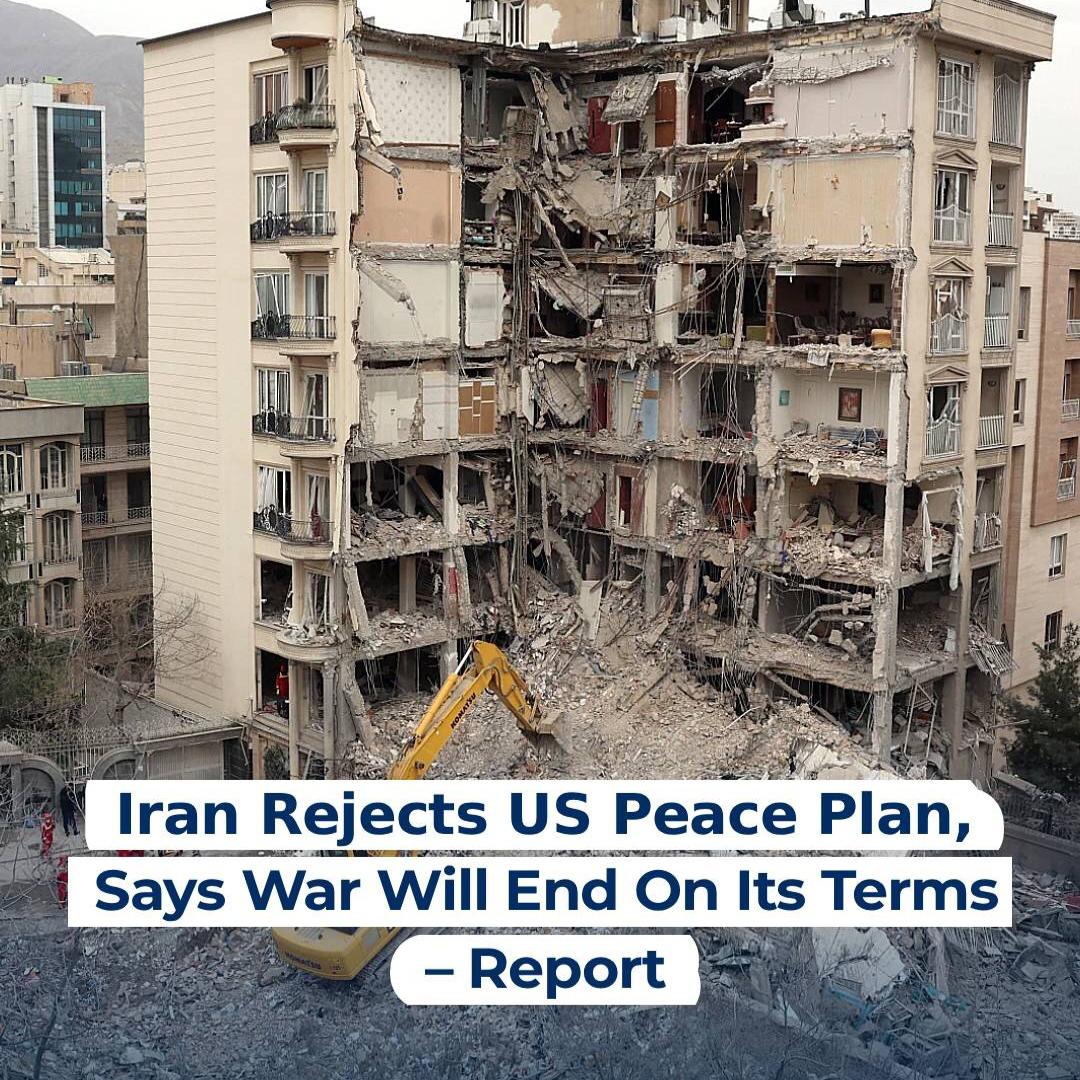
Iran rejects US peace plan, signals it will dictate terms of any ceasefire Tehran dismisses Washington’s proposal amid intense back‑channel diplomacy, insisting war will end only on its conditions Amid ongoing back‑channel diplomacy to end the widening conflict in the Middle East, Iran has rejected a peace proposal from the United States, signalling that any ceasefire or end to the war must be negotiated on terms dictated by Tehran.
Iran’s response was broadcast on state media, where officials described the US peace plan as unacceptable and “excessive”. Iranian leaders asserted that the war would end only when Iran determines its own conditions have been met, rejecting Washington’s framework as inadequate.
The development comes as both sides weigh diplomatic pathways even while active military operations continue across various fronts of the conflict.
- Tehran dismissed the 15‑point peace proposal relayed by the United States via intermediaries, including Pakistan.
- Officials characterised the plan as “maximalist” and unrealistic, arguing it failed to protect Iran’s strategic and security interests.
- State media portrayed Iran’s stance as a declaration that it would set the terms of any ceasefire or resolution, not accept externally imposed conditions.
Despite reports of rejection, some diplomatic sources indicate that Iran has put forward its own counter‑conditions, including guarantees against future attacks and recognition of strategic rights underlining a deep mistrust of the US proposal’s terms. The United States, for its part, has downplayed reports of an outright rejection, with officials saying negotiations remain ongoing and that the peace plan initially shared through diplomatic intermediaries still forms a basis for potential dialogue. White House spokespeople stressed that discussions with Tehran are “productive”, and denied that diplomacy has collapsed completely. They also reiterated that Iran’s objections reflect strategic posturing rather than a final refusal to talk.
The rejection underscores the complexity of diplomacy in the midst of active conflict
- Pakistan and Turkey have both played roles in delivering and relaying peace proposals between the US and Iran.
- Tehran’s critique reflects broader concerns in the region about distribution of power, security guarantees, and Iran’s own strategic objectives.
- Regional and global powers continue to monitor developments closely as markets and geopolitical tensions respond to both hope and uncertainty.
- Security guarantees vs military pressure
- Recognition of strategic interests vs unilateral demands
- The fate of broader regional alignments and international sanctions
Unless consensus is reached, these disagreements could prolong the conflict and limit progress toward a formal ceasefire
- Tehran continues to insist on negotiations only under conditions it deems equitable.
- Washington maintains that negotiation channels remain open and can yield results with continued diplomatic engagement.
Observers caution that without mutual concessions, the conflict may continue with heightened tensions across multiple fronts diplomatically and militarily.