Graduate Applies For 500 Jobs In Two Months As Youth Employment Struggles Grow
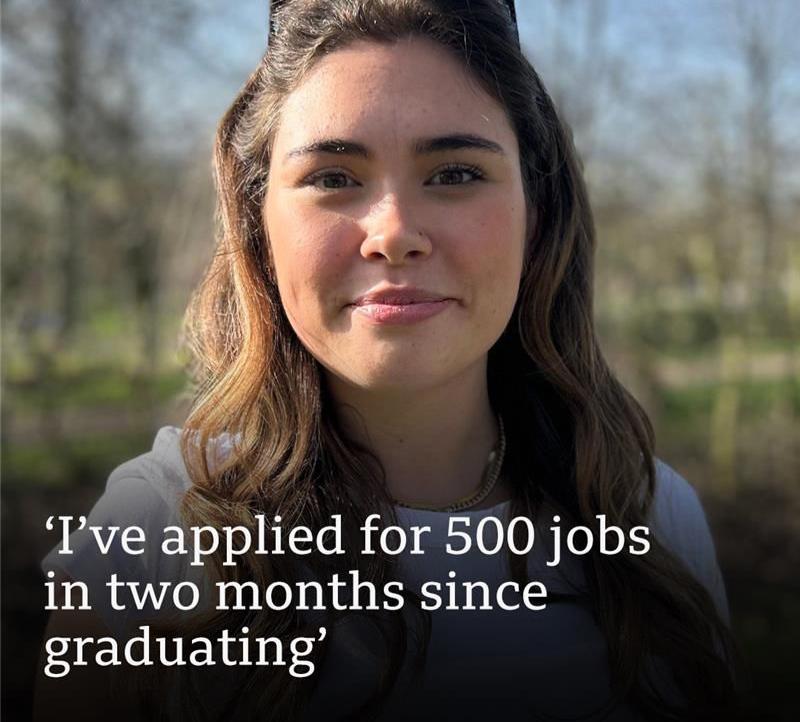
Graduate applies for 500 jobs in two months as youth employment struggles grow A university graduate has said she applied for more than 500 jobs in just two months after finishing her degree, highlighting the growing difficulty young people face in securing work. Charlotte, who recently graduated, said the job search has been “upsetting” despite her academic achievements. She explained that even entry-level roles now demand significantly more effort to secure than in the past, adding that candidates must “work 10 times harder” than previous generations to land similar opportunities. Her experience reflects a wider trend affecting many young job seekers, particularly recent graduates trying to enter an increasingly competitive labour market. Experts say a combination of factors is contributing to the challenge, including:
- Increased competition for entry-level roles
- Employers demanding prior experience
- A shortage of stable, well-paid graduate jobs
Many available positions also offer limited career progression, leaving graduates feeling discouraged about their prospects.
Some young people report applying for hundreds of roles with little success, while others are turning to temporary, freelance or gig work as a stopgap.
The pressure of repeated rejections is taking a toll. Reports indicate that prolonged job searches are affecting:
- Confidence
- Motivation
- Mental health
Charlotte’s experience is not unusual, with many graduates facing similar frustrations shortly after completing their studies.
Governments and employers are introducing measures aimed at improving access to “good, well-paid jobs”, including:
- Skills training and apprenticeship programmes
- Partnerships between universities and industries
- Initiatives to boost youth employment and hiring
There is also growing discussion around reforming education and career pathways to better align with labour market needs.
While efforts are underway, analysts say more systemic changes may be required to ensure young people can transition smoothly from education into stable careers.
For now, stories like Charlotte’s underline a broader reality: for many graduates, securing a first job is becoming longer, harder, and more uncertain than before.