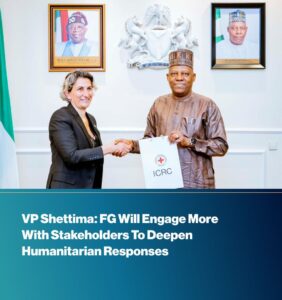
FG LAUNCHES NATIONAL IDP POLICY TO SUPPORT EDUCATION AND DURABLE SOLUTIONS IN KATSINA AND ZAMFARA
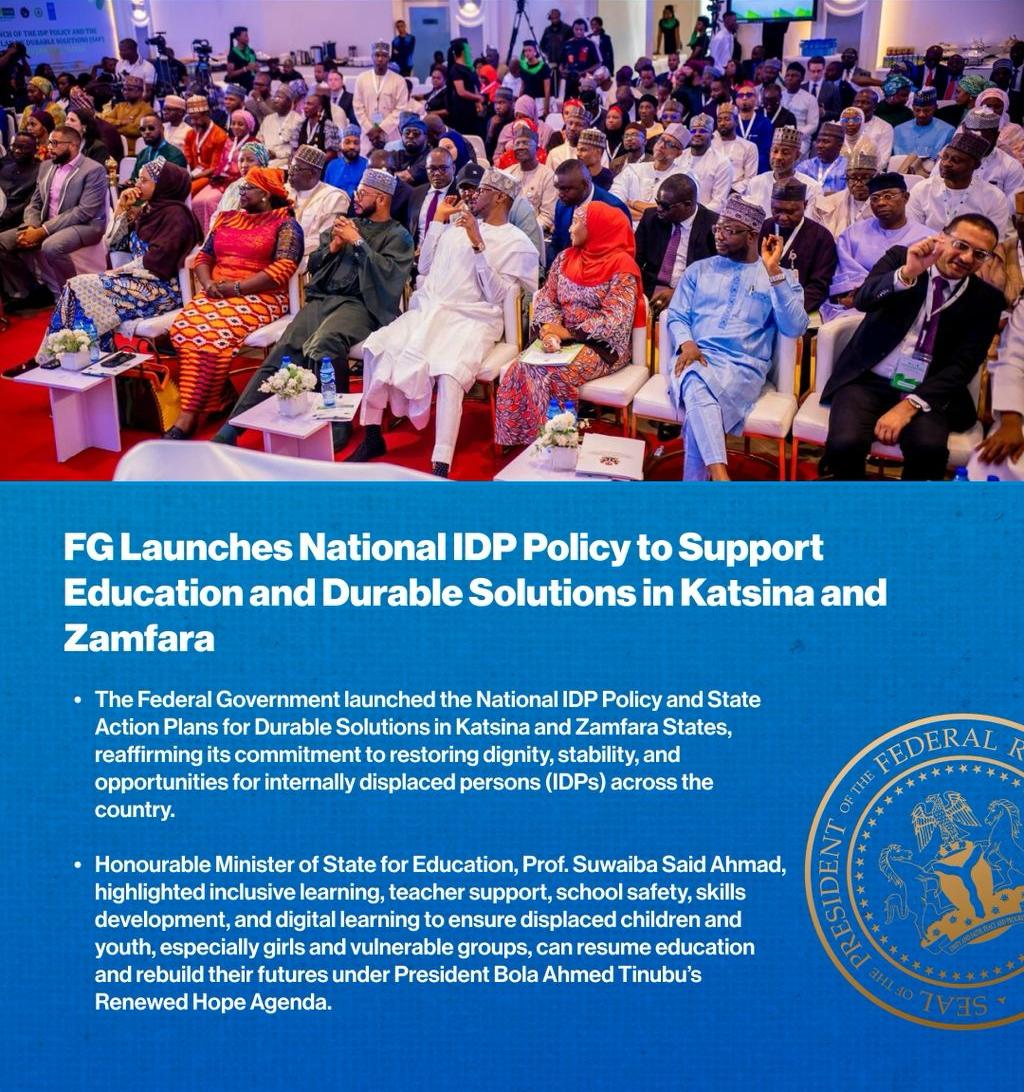
FG LAUNCHES NATIONAL IDP POLICY TO SUPPORT EDUCATION AND DURABLE SOLUTIONS IN KATSINA AND ZAMFARA
The Federal Government of Nigeria (FG) in collaboration with state authorities, the Northwest Governors’ Forum (NWGF) and international partners has formally launched a comprehensive policy framework and State Action Plans aimed at addressing the plight of internally displaced persons (IDPs) in Katsina and Zamfara States, with a particular focus on education, durable solutions and long‑term reintegration. The National Policy on Internally Displaced Persons and accompanying State Action Plans on Durable Solutions (SAP) for Katsina and Zamfara were ceremonially unveiled on Monday, February 16, 2026 in Abuja.
The initiative signals a transition from short‑term humanitarian relief to sustainable, development‑oriented strategies that restore dignity, security and opportunity for displaced families affected by conflict, insecurity and communal violence.
Both states, especially Zamfara and Katsina, have seen widespread displacement caused by insecurity and banditry, with thousands of families uprooted, livelihoods disrupted and children removed from schooling. The policy framework covers protection, livelihoods, education, infrastructure rehabilitation and social services, with a shift toward safe return, peaceful relocation and community reintegration for displaced populations.
Unlike emergency aid alone, the policy emphasises durable solutions that rebuild communities, reintegrate IDPs into productive life and expand access to quality education a critical element in breaking cycles of displacement and poverty.
A key objective of the initiative is to ensure access to education for displaced children and youth, integrating them into formal and non‑formal learning pathways to prevent interruption of their schooling The action plans also prioritise skills development, livelihoods programmes, vocational training and economic empowerment to help former IDPs rebuild self‑reliance and contribute meaningfully to local economies.
By embedding education and economic opportunities alongside protection measures, the framework aims to transform displacement settings into environments of growth rather than prolonged dependency. The launch reflects a multi‑stakeholder collaboration involving the Federal Government, NWGF, state authorities and developmental partners like the United Nations Development Programme (UNDP) The partnership underscores that structural challenges like displacement require coordinated, long‑term responses aligning national priorities with international best practices for durable solutions. Nigeria currently hosts millions of internally displaced persons across various regions, straining public systems and hindering social cohesion.
By institutionalising a policy‑driven approach that prioritises education, resilience and reintegration, the FG’s initiative aims to shift the national response from reactive emergency management to proactive development, supporting pathways out of displacement for IDPs and their host communities.