FG Intensifies Infrastructure Engagement In Niger State
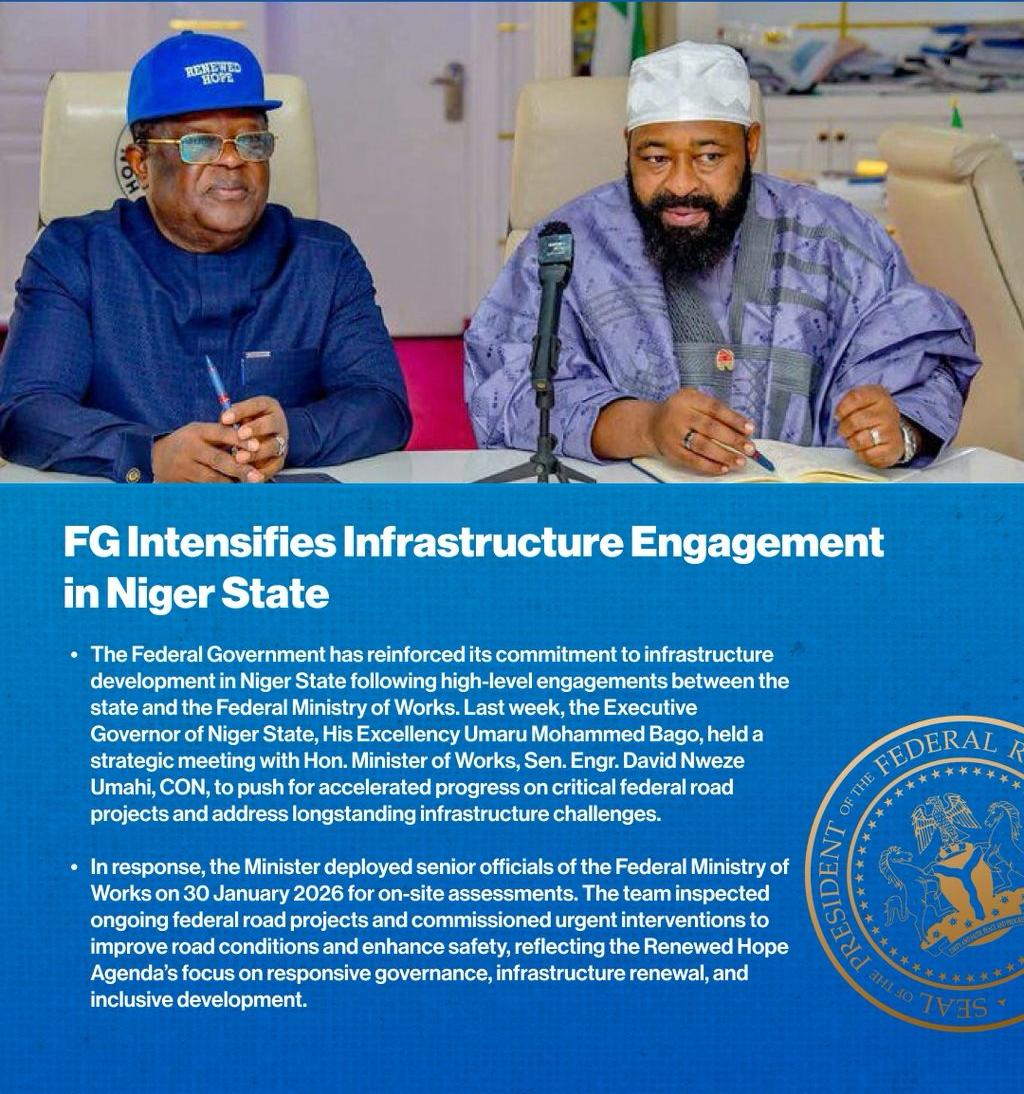
FG Intensifies Infrastructure Engagement in Niger State
Abuja, Nigeria (Feb 2, 2026) The Federal Government (FG) has stepped up infrastructure delivery and strategic collaborations in Niger State, part of President Bola Ahmed Tinubu’s Renewed Hope Agenda, aimed at boosting connectivity, safety, and economic growth across the region. At the centre of the federal push are road rehabilitation, project acceleration partnerships, and new development agreements, reaffirming the administration’s commitment to closing Nigeria’s infrastructure gap and facilitating inclusive development
The Federal Ministry of Works has commissioned rehabilitated sections of the Gwada–Shiroro Road in Niger State, restoring critical connectivity and improving safety for commuters and goods movement. The interventions included emergency repairs to failed portions of the road, embankment washouts, and construction of box culverts to strengthen the carriageway’s resilience.
Officials described the project as a key milestone in unlocking economic activities along this vital corridor, reflecting the Renewed Hope Agenda’s focus on road infrastructure as an enabler of social and commercial engagement. In a high‑level engagement on January 28, 2026, the Minister of Works, Senator Engr. David Umahi, CON, FNSE, FNATE, met with Niger State Governor Umaru Mohammed Bago to reinforce joint efforts to accelerate federal road and bridge projects across the state. Affirmation of FG support to ongoing federal roads, notably the Minna–Suleja Road (71 km), which has cleared significant procurement hurdles and is slated for prioritisation.
Assurance that advance funds expended by Niger State on federal corridors will be refunded by the FG, enhancing trust and cooperation.
Updates on Jebba and Lambata Bridges, where integrity testing and structural works continue to prevent degradation and ensure long‑term serviceability.
Both leaders emphasised that road infrastructure is a shared responsibility and committed to deepening collaboration for swift project delivery, improved road safety, and expanded economic opportunities for residents and businesses.
The Federal Ministry of Works has also set target milestones for key Niger State routes:
The 29.5 km Bida–Zungeru–Wushishi road is being developed with a May 29, 2026 commissioning target, signalling intensifying efforts as the Tinubu administration approaches its third anniversary in office.
Progress reports indicate substantial asphalt overlay works, with over 16 km completed, reinforcing optimism about the project’s timely delivery. These infrastructure upgrades are expected to enhance accessibility, reduce travel time, and facilitate the free flow of agricultural produce and commerce within and beyond Niger State.
Beyond roads, the Federal Government has signed a major MoU with the Niger State government to launch a 100,000‑hectare Mass Housing and Agricultural Settlement Project under sustainable integrated frameworks. The initiative, anchored by the Federal Ministry of Finance, aims to strengthen agricultural value chains, boost food security, and expand planned housing for rural communities.
The project highlights a multi‑sectoral approach to infrastructure and development, embedding rural settlement planning into broader economic growth strategies consistent with the Renewed Hope Agenda. The intensified federal engagement in Niger State reflects key pillars of the Renewed Hope Agenda infrastructure, trade facilitation, and socio‑economic empowerment. Upgraded roads and bridges are not merely transport assets; they are economic lifelines that enhance mobility, stimulate investments, and bridge rural‑urban divides across Nigeria.
As these projects near completion, they are expected to drive job creation, boost commerce, and improve quality of life for communities within the state and across the North‑Central region.