Farage Urges X To Remove Fake AI Adverts Showing Him Fighting Bank Of England Governor
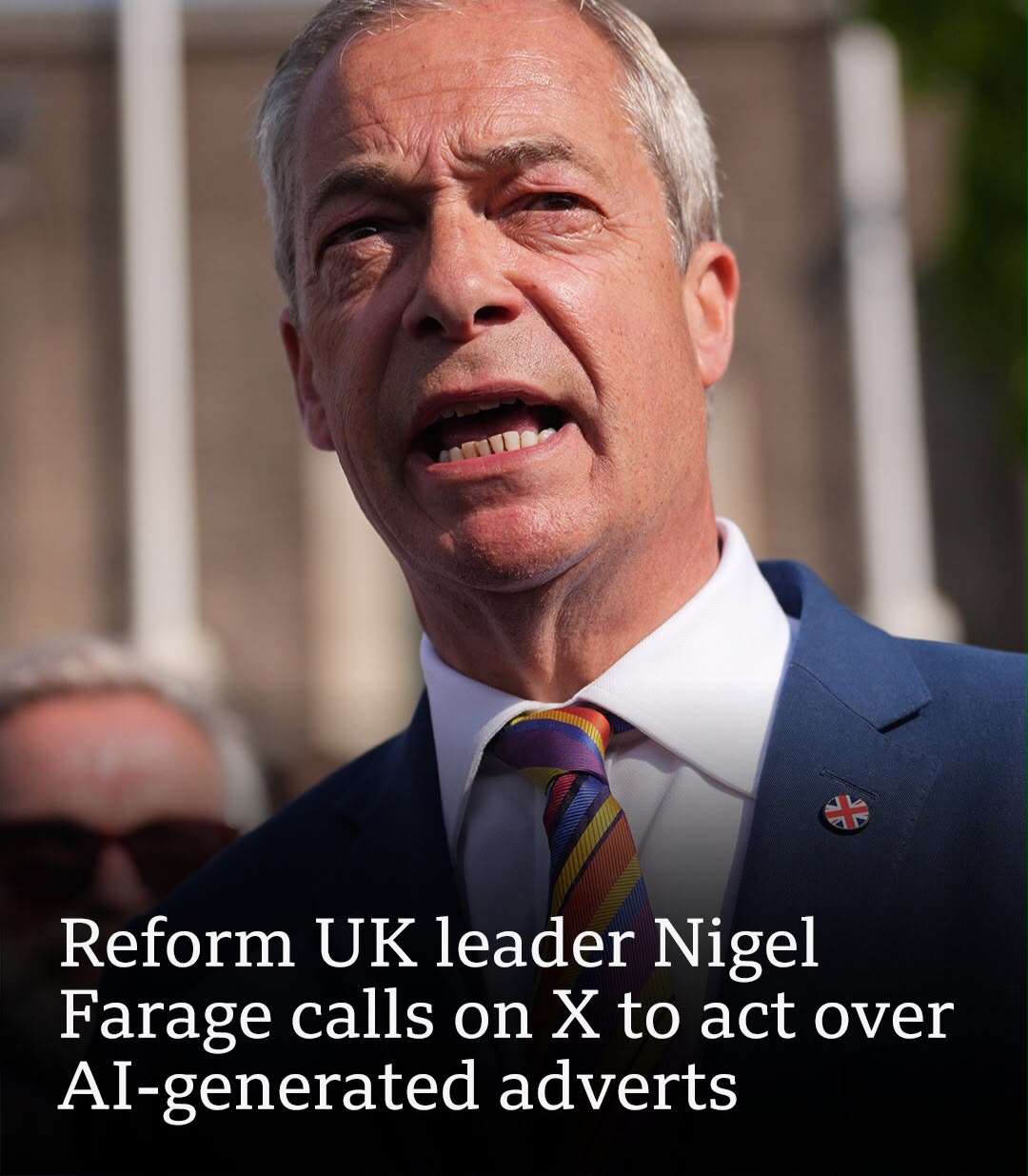
Farage Urges X to Remove Fake AI Adverts Showing Him Fighting Bank of England Governor Reform UK leader Nigel Farage has called on social media platform X to take swift action against a series of fake artificial intelligence-generated advertisements that falsely depict him engaging in violent confrontations with Andrew Bailey. The adverts, which have circulated widely on X in recent days, use AI-generated images and videos to create the impression that Farage and Bailey were involved in a physical altercation on what appears to be the set of the BBC political discussion programme Question Time. The fabricated content includes scenes showing Farage kicking Bailey, throwing water at him, and in some cases brandishing a firearm. According to reports, the deepfake adverts directed users to fraudulent websites disguised as News articles. The fake pages promoted an investment scheme claiming that a small initial deposit could generate extraordinary financial returns within a short period, a hallmark of online financial scams.Farage said his party had contacted X “at the highest level” and urged the platform to remove the adverts as quickly as possible. He publicly distanced himself from the content, stating that while he and Bailey have political and economic disagreements, he would never engage in violence. In a statement posted on X, Farage wrote: “You may have seen some bizarre AI videos on this platform today. Whilst Andrew Bailey and I have our disagreements, I would never take it that far.” The Bank of England also issued a public warning after the adverts emerged, cautioning people to remain vigilant against online scams that misuse the identities of public figures and trusted institutions. Officials said the fake adverts were part of a growing trend of AI-powered fraud schemes targeting internet users. Bailey warned that fake advertisements impersonating central banks and other respected organizations are becoming increasingly common. He said such scams are designed to exploit members of the public, particularly vulnerable individuals, and urged users to report suspicious content. The incident has renewed concerns about the spread of AI-generated misinformation and fraudulent advertising on social media platforms. Consumer advocates and financial experts have repeatedly warned that deepfake technology is making it easier for criminals to create convincing scams featuring politicians, celebrities and business leaders. The controversy also highlights growing scrutiny of social media companies over their ability to detect and remove deceptive AI-generated content. Critics argue that platforms must strengthen safeguards to prevent scammers from using paid advertisements to reach large audiences.
As authorities, political parties and financial regulators investigate the adverts, the case has become one of the latest examples of how rapidly advancing AI technology is creating new challenges in the fight against online fraud and digital misinformation.