Cuba’s Electrical Grid Collapses In Massive Nationwide Blackout Amid Worsening Energy Crisis
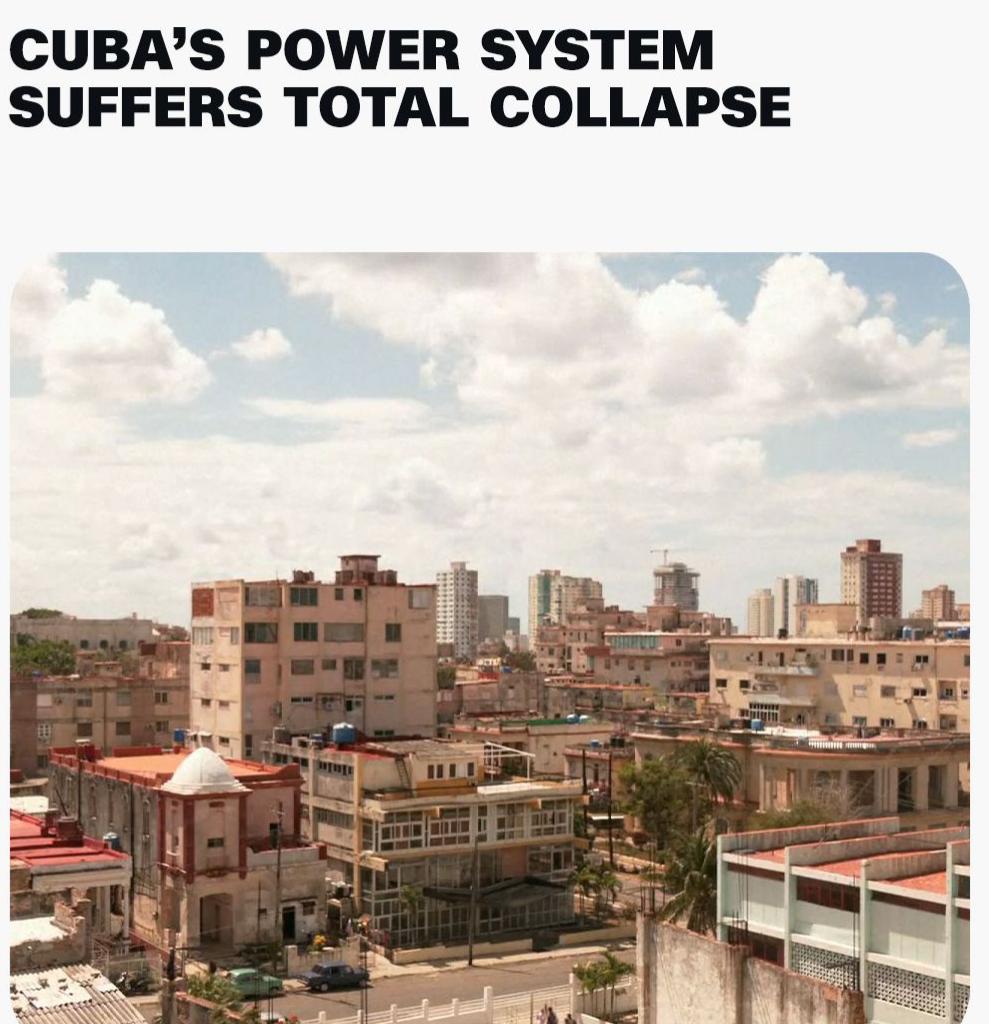
Cuba’s Electrical Grid Collapses in Massive Nationwide Blackout Amid Worsening Energy Crisis Cuba’s national electrical grid suffered a total collapse on Monday, plunging roughly 10 million residents into darkness in the island’s first full nationwide blackout since the effective cutoff of foreign oil supplies to the country The state power operator confirmed that the entire grid disconnected, cutting electricity to homes, businesses, hospitals and critical infrastructure across all provinces. Emergency crews have begun investigating the cause and working to restore power in stages. Authorities say the grid failure worsens a deepening energy crisis caused by a combination of ageing infrastructure, fuel shortages, and reduced oil imports a situation exacerbated by a U.S.-imposed oil blockade that has severely limited the flow of foreign fuel into the Caribbean nation. Cuba has received only minimal oil shipments this year, with small deliveries from Mexico and Jamaica, while Venezuela once Cuba’s major oil supplier has sent no fuel, according to reports. The blackout marks the latest in a series of major power outages that have hit Cuba over the past two years, as the country’s grid struggles under the strain of persistent shortages and infrastructure decay.
As the crisis unfolds, the government has begun restoring electricity to small microsystems while attempting to restart key generating stations and transmission lines to reconnect the national grid gradually. Cuban President Miguel Díaz-Canel has acknowledged the severity of the situation, noting that the island has not received significant oil deliveries in more than three months a development that has also impacted essential services and economic activity. Protests over longstanding power shortages and food scarcity have erupted in several cities, highlighting growing public frustration. Cuba’s dependence on imported oil for electricity generation, coupled with an obsolete energy grid and decades of limited investment, has made the country vulnerable to shortages and outages. The ongoing energy crisis has already triggered rolling blackouts, fuel rationing, and interruptions in water and medical services. Tensions with the United States have also escalated in connection with the oil supply issue. The U.S. tightened sanctions in recent years, curtailing Venezuela’s ability to export oil to Cuba and further tightening Cuba’s access to fuel. Havana has entered into talks with U.S. officials in hopes of finding solutions to energy and economic concerns, though diplomatic progress remains uncertain. With millions still without consistent power and growing economic pressure, Cuba’s latest blackout underscores the urgent need for energy reforms, fuel access, and infrastructure investment. The fallout is likely to have lasting effects on daily life, the economy, and political stability in the coming months.