An Austrian Court Has Sentenced A 21-year-old Man To 15 Years In Prison For Plotting A Terrorist Attack Targeting A Taylor Swift
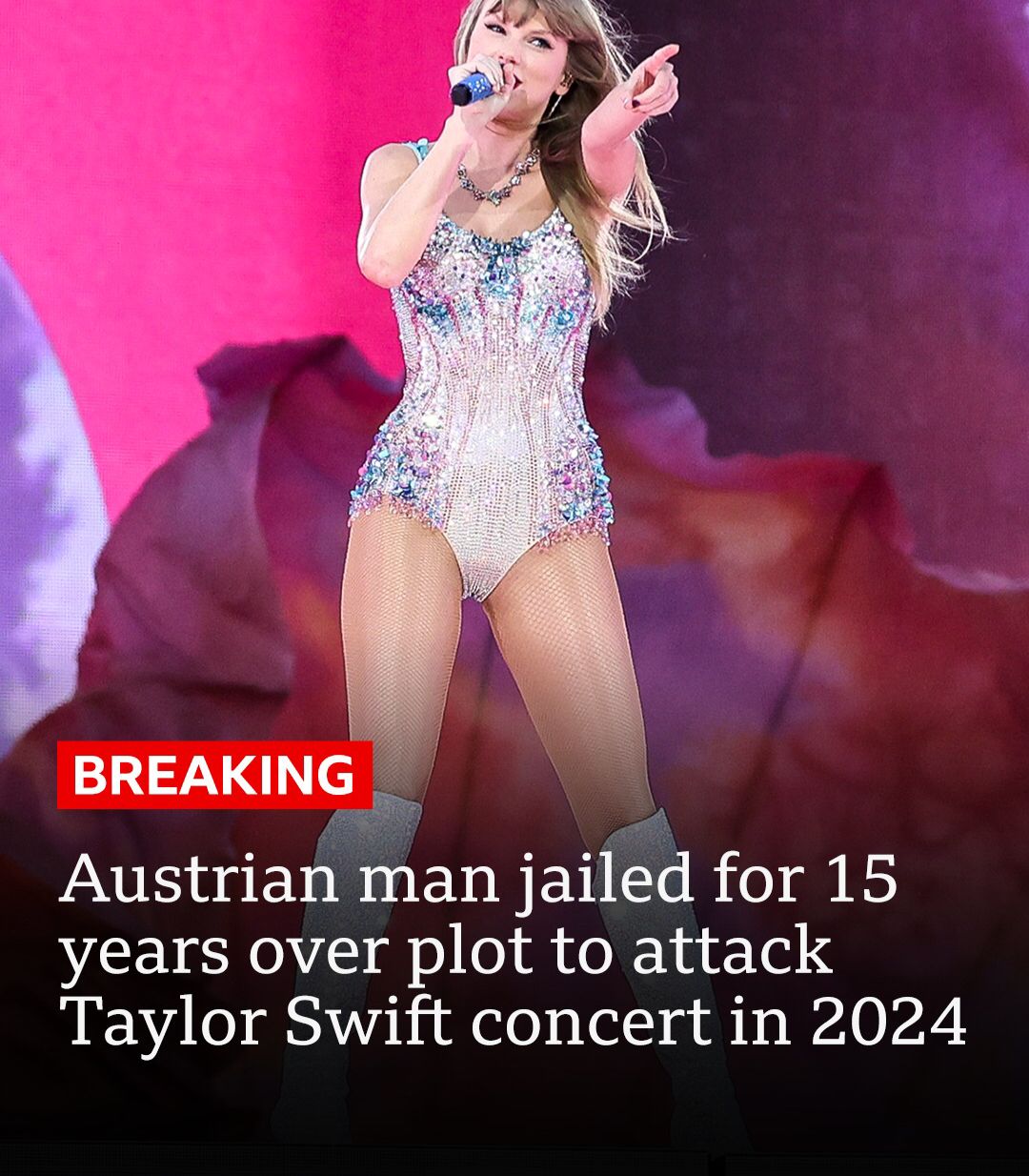
An Austrian court has sentenced a 21-year-old man to 15 years in prison for plotting a terrorist attack targeting a Taylor Swift concert in Vienna in 2024, in a case that drew global attention after the planned shows were cancelled over security fears. The defendant, identified as Beran A., was convicted of multiple terrorism-related offences after admitting he planned a mass-casualty attack at one of Swift’s “Eras Tour” concerts at the Ernst Happel Stadium in Vienna. Prosecutors said he intended to use knives and improvised explosives against concertgoers, with authorities later discovering bomb-making materials during investigations. Court proceedings heard that the plot was inspired by extremist ideology, and investigators linked the accused to Islamic State-related communications and propaganda. He was arrested in August 2024, just a day before Swift’s first scheduled performance in Vienna, after intelligence agencies alerted Austrian authorities to the threat. Following the arrest, organisers cancelled all three of Swift’s Vienna concerts, affecting tens of thousands of fans and prompting widespread concern over the security of major public events across Europe. The cancellations marked one of the most high-profile disruptions of Swift’s global tour. During the trial, prosecutors detailed how the accused attempted to obtain weapons and prepare materials for the attack, while also communicating with individuals linked to extremist networks. A court also heard that he expressed remorse during proceedings.Two additional suspects were reportedly involved in related terrorism cases, with one receiving a separate prison sentence and another detained abroad in connection with unrelated violent activity.The court ultimately imposed a 15-year prison sentence, reflecting the seriousness of the planned attack and the scale of potential casualties had it been carried out. Authorities said the case highlighted ongoing concerns about online radicalisation and the targeting of large public entertainment events.The ruling brings closure to a case that shocked Austria and the global entertainment industry, underscoring heightened security measures now associated with large-scale concerts and international tours.