Rare Orangutan Species Discovered In 2017 Faces Extinction Risk After Deadly Storms
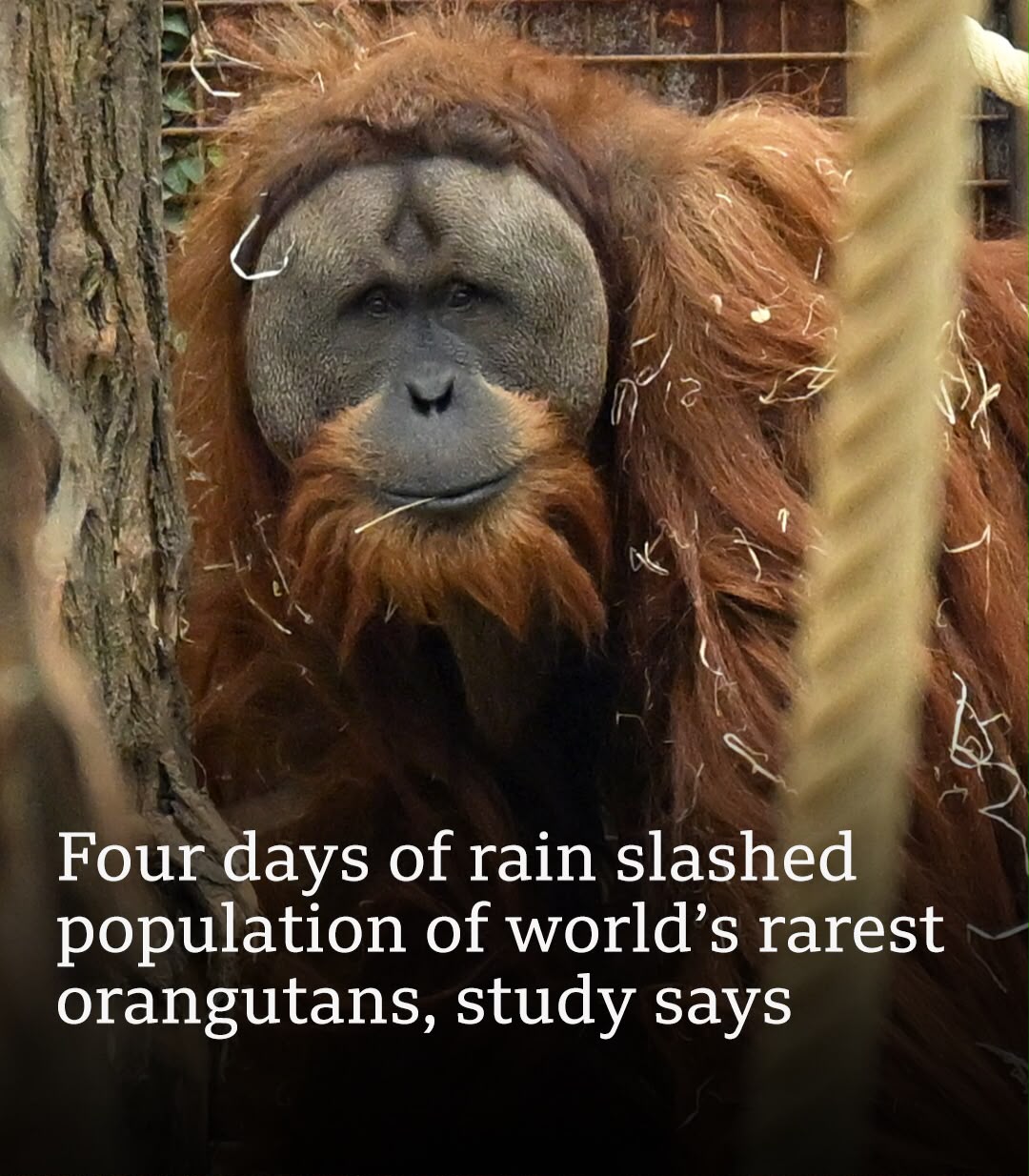
Scientists are warning that the world’s rarest great ape, the Tapanuli orangutan, could be edging closer to extinction after extreme rainfall and landslides in Indonesia killed an estimated 7% of its entire population in just a few days. The Tapanuli orangutan, scientifically known as Pongo tapanuliensis, was only officially recognized as a distinct species in 2017, becoming the first new great ape species identified in nearly a century. Fewer than 800 individuals are believed to remain, all confined to a small area of forest in the Batang Toru ecosystem of North Sumatra. According to a new study, approximately 58 Tapanuli orangutans died after four days of extreme rainfall triggered devastating landslides across their habitat in late 2025. Researchers say the losses represent about 7% of the global population and 11% of the animals living in the affected area. Scientists described the event as a severe blow to a species already considered critically endangered. Previous research suggested that losing as little as 1% of the population annually could eventually lead to extinction. The latest losses occurred within days rather than years, raising concerns about the species’ long-term survival. The Tapanuli orangutan inhabits a fragmented forest landscape that has faced pressure from mining, infrastructure projects, agriculture and habitat degradation. Conservationists say climate change is increasing the intensity of extreme weather events, further threatening the species’ remaining habitat. Landslides linked to the storms destroyed thousands of hectares of forest in the Batang Toru ecosystem, according to researchers. When scientists formally identified the species in 2017, they immediately warned that it was among the most endangered great apes in the world. Researchers distinguished it from other orangutan species through genetic, behavioral and anatomical evidence, finding that the isolated population had evolved separately for thousands of years. Conservation groups are now calling for stronger protection measures, including expanded protected areas, restrictions on activities that damage habitat and increased international funding for recovery efforts. Researchers argue that without urgent intervention, the Tapanuli orangutan could become the first great ape species to disappear in modern times. The warning comes as scientists continue to monitor the impact of climate-related disasters on wildlife populations worldwide, with the fate of the Tapanuli orangutan increasingly viewed as a test of global conservation efforts in the face of environmental change.