Mangrove Forests Stage Global Comeback, Offering Hope For Climate And Coastal Communities
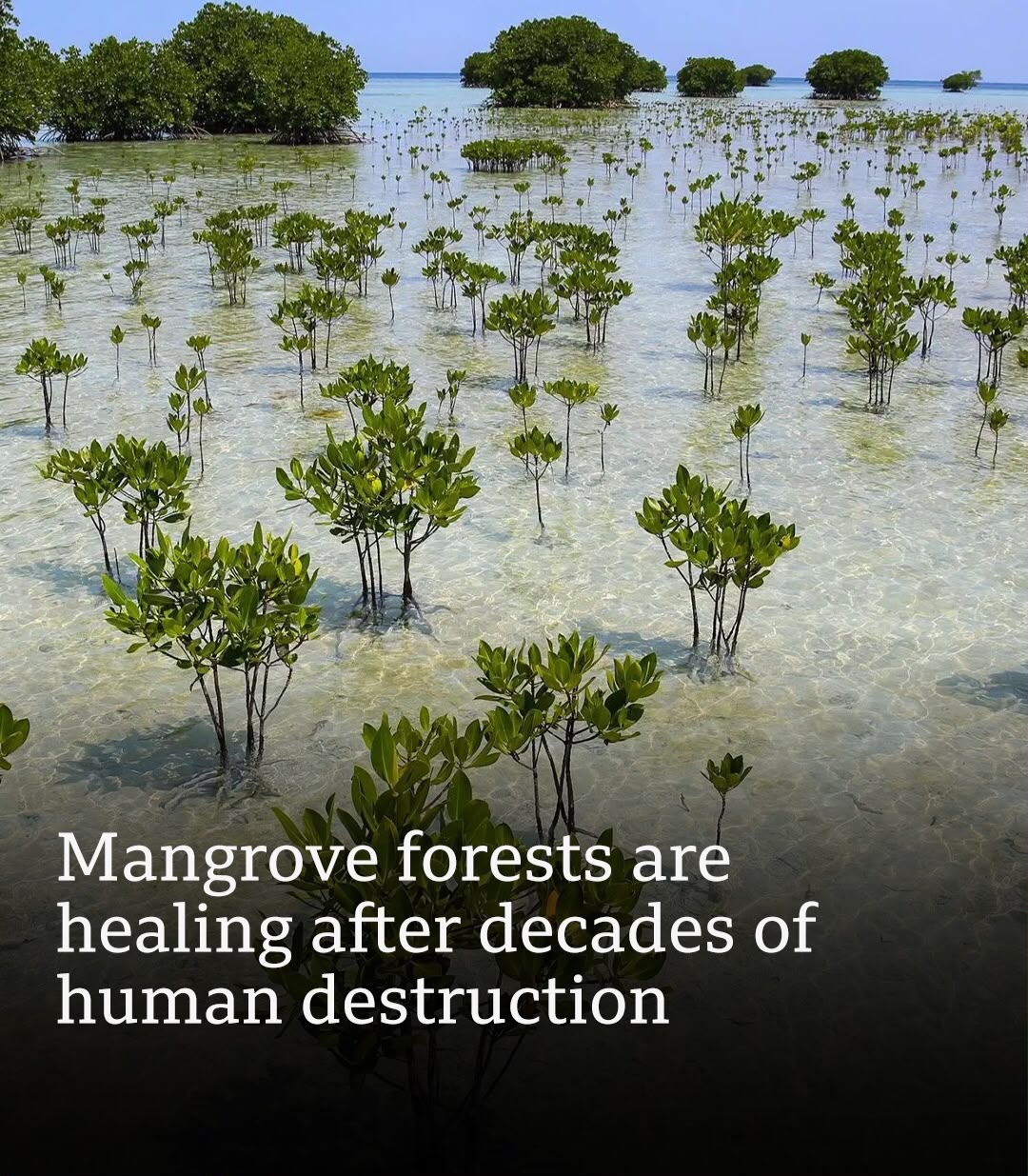
Mangrove Forests Stage Global Comeback, Offering Hope for Climate and Coastal Communities Mangrove forests often called “swampy” coastal ecosystems are making a surprising recovery in several parts of the world, offering renewed hope for climate action, biodiversity protection, and the survival of coastal communities dependent on them. Mangrove forests, which grow in salty coastal waters where land meets the sea, are increasingly being recognized as one of the planet’s most valuable ecosystems. Despite years of decline caused by deforestation, pollution, and coastal development, new evidence suggests that these forests are now recovering in several regions through restoration projects and natural regeneration.Experts say mangroves play a critical role in protecting coastlines from storm surges, reducing flooding, and preventing erosion. Their dense root systems act as natural barriers, shielding coastal communities from extreme weather events while also stabilizing shorelines that are increasingly threatened by rising sea levels. Beyond physical protection, mangroves are also powerful “blue carbon” ecosystems. They absorb and store large amounts of carbon dioxide up to four times more than many terrestrial forests helping to slow global warming by locking carbon into their roots and surrounding soils for centuries or even millennia. The forests are also biodiversity hotspots, providing nursery grounds for fish, shelter for birds and marine life, and supporting food security and livelihoods for millions of people living in coastal regions. Their recovery is therefore seen as both an environmental and socio-economic gain. According to conservation researchers, the recent rebound is being driven by a combination of community-led restoration efforts, improved awareness of mangrove value, and natural regrowth in abandoned coastal areas such as former aquaculture ponds. However, scientists warn that these gains remain fragile and could be reversed if deforestation and pollution continue.
- Mangrove forests are showing signs of recovery in some global regions.
- They protect coastlines from floods, storms, and erosion.
- They store large amounts of carbon, helping combat climate change.
- They support biodiversity and coastal livelihoods.
- Recovery is driven by restoration projects and natural regrowth, but remains fragile.
- While mangrove forests are still under threat globally, their gradual return in some regions is being seen as a rare environmental success story one that could significantly strengthen climate resilience and coastal protection if sustained.