Toshifumi Suzuki, Founder Of Seven-Eleven Japan And Father Of Japan’s Convenience Store Industry, Dies At 93
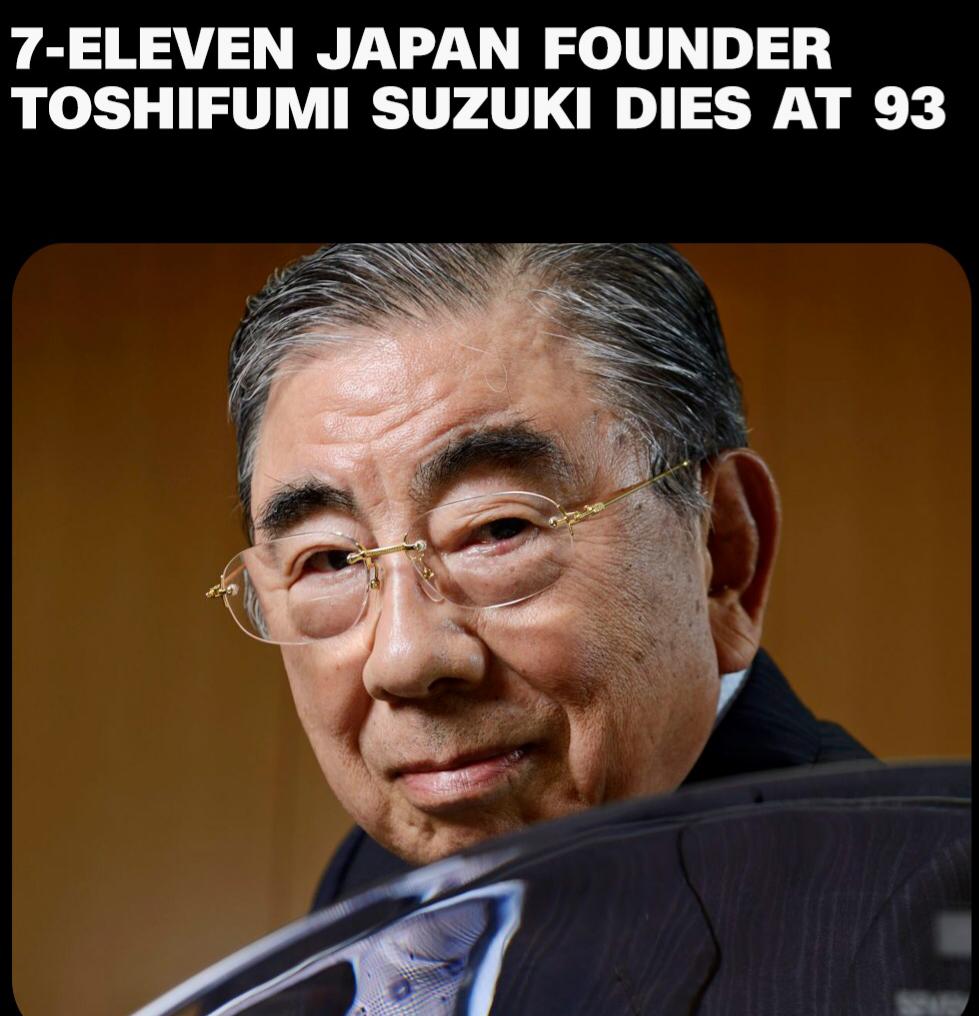
Toshifumi Suzuki, Founder of Seven-Eleven Japan and Father of Japan’s Convenience Store Industry, Dies at 93 Toshifumi Suzuki, the pioneering founder of Seven-Eleven Japan and widely regarded as the architect of Japan’s modern convenience store culture, has died at the age of 93. His company, Seven & i Holdings, confirmed that Suzuki passed away on May 18, 2026, due to heart failure. Suzuki is credited with revolutionising Japan’s retail landscape by introducing and expanding the 7-Eleven convenience store model in Japan in the early 1970s. He played a central role in launching the first Japanese 7-Eleven store in Tokyo in 1974, following a franchise agreement with the U.S.-based Southland Corporation. Over time, he transformed the brand into a dominant force in Japanese daily life, helping to establish the “conbini” (convenience store) culture that now defines urban retail in the country. Under Suzuki’s leadership, Seven-Eleven Japan grew rapidly and later became a global retail powerhouse with tens of thousands of stores worldwide. The chain expanded to more than 80,000 stores across multiple countries, making it one of the largest convenience store networks in the world. He also played a key role in expanding the franchise model internationally and strengthening Japan’s position in global retail innovation.Suzuki was widely recognised for introducing data-driven inventory management systems, long before such systems became industry standard.
- Real-time sales tracking
- Localised product selection
- Rapid inventory turnover
- Ready-to-eat meal expansion
These innovations helped transform 7-Eleven stores into highly efficient, customer-focused retail hubs that matched local demand patterns. In a defining moment of his career, Suzuki helped lead the restructuring and financial rescue of Southland Corporation, the original U.S. parent of 7-Eleven, after it faced bankruptcy in the early 1990s. This move eventually positioned the Japanese arm as the stronger global entity within the brand’s structure. Suzuki later became a central figure in the formation of Seven & i Holdings in 2005, overseeing its expansion into a major multinational retail conglomerate. He stepped down from top leadership roles in 2016 following internal management disputes, but remained an influential adviser within the company. Often described as the “father of Japan’s convenience store industry,” Suzuki is credited with embedding convenience stores into everyday Japanese life offering services such as food, banking, bill payments, and logistics support.
His model has since influenced retail systems globally and reshaped consumer expectations around accessibility and speed Toshifumi Suzuki’s death marks the end of an era in global retail innovation. His vision turned a simple franchise partnership into one of the world’s most successful retail systems, reshaping how millions of people shop every day.