UK DECLINES TO SIGN UP TO TRUMP’S PEACE INITIATIVE
UK DECLINES TO SIGN UP TO TRUMP’S PEACE INITIATIVE
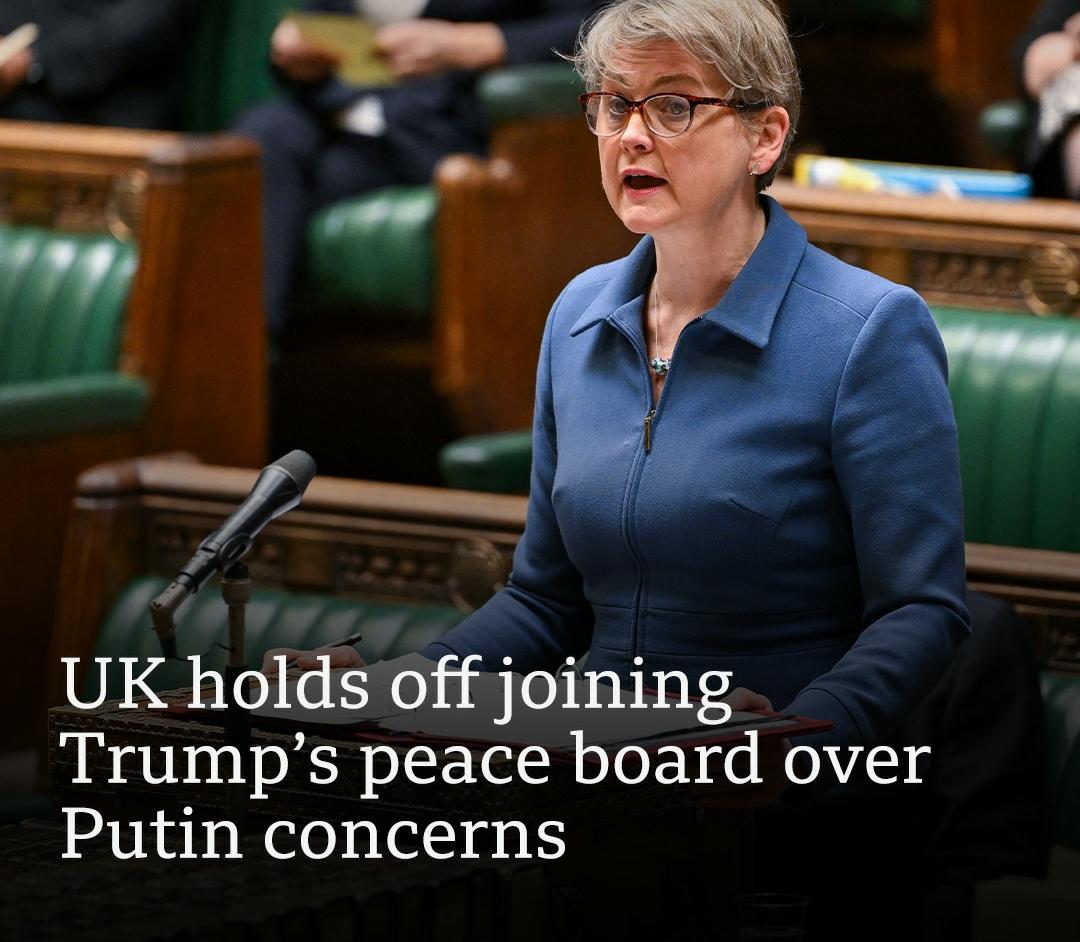
UK won’t sign Trump’s “Board of Peace” today, citing Putin involvement concerns The United Kingdom announced it will not join the signing ceremony for U.S. President Donald Trump’s new “Board of Peace” at the World Economic Forum in Davos. Foreign Secretary Yvette Cooper said the UK supports Trump’s broader 20-point peace plan for the Middle East, especially regarding Gaza, but will not be one of the signatories now due to legal and geopolitical concerns especially the invitation extended to Russian President Vladimir Putin
Legal and diplomatic worries cited by London
Cooper told BBC Breakfast that the peace board raises “broader legal issues” and that Britain has serious reservations about Putin’s participation in a peace initiative while Russia continues its war in Ukraine. She emphasised that the UK wants peace discussions to be grounded in genuine conflict resolution, which she argues has not yet been demonstrated by the Kremlin.
Support for peace plan but not this framework
Although the UK supports the aims of Trump’s 20-point Middle East peace plan, officials in London say they prefer to work with established international mechanisms including the UN and allied partners rather than endorsing a new body whose legal status and global remit remain unclear. Trump unveils “Board of Peace”
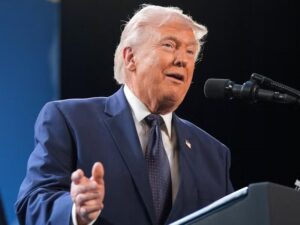
At the annual World Economic Forum gathering in Davos, Trump formally unveiled the “Board of Peace,” promoting it as a mechanism to help enforce the Gaza ceasefire and support reconstruction efforts and potentially address other conflicts. The board has drawn interest from dozens of countries, although participation is uneven among key allies. While Saudi Arabia, Turkey, Egypt, Israel and others have signalled willingness to join, major European partners like France, Norway, Sweden and now the UK are holding off, often over strategic or normative concerns about the initiative’s structure and implications. UK internal political angle
Incoming reports show that Labour leader Sir Keir Starmer praised diplomatic pragmatism in broader foreign policy, but supported the UK’s choice not to sign on to the board at this time due to unease about including Putin. Spain/Europe noting UK hesitation
International coverage highlights that several European countries are similarly cautious or critical especially given how the initiative appears to go beyond Gaza and invites leaders whose peace credentials are questioned. Analysts note that skepticism ranges from legal clarity to concerns about undermining longstanding multilateral institutions. The board is a new international framework floated by Trump that aims to create an alternative body to existing global institutions like the United Nations with membership and leadership closely tied to Trump’s administration. Critics describe it as a controversial, potentially rival structure to traditional diplomacy.
UK’s move reflects diplomatic caution balancing support for peace goals with skepticism about the board’s legal form, leadership, and the wisdom of involving currently adversarial actors.
Putin’s potential role is central to the UK’s hesitation with Cooper underlining that true peace must be evidenced by actions, not invitations. This illustrates broader Western unease with Trump’s evolving foreign policy methods and alliances, as some partners push for more established multilateral processes.