University Of Sussex Wins Legal Challenge Against Record £585,000 Free Speech Fine
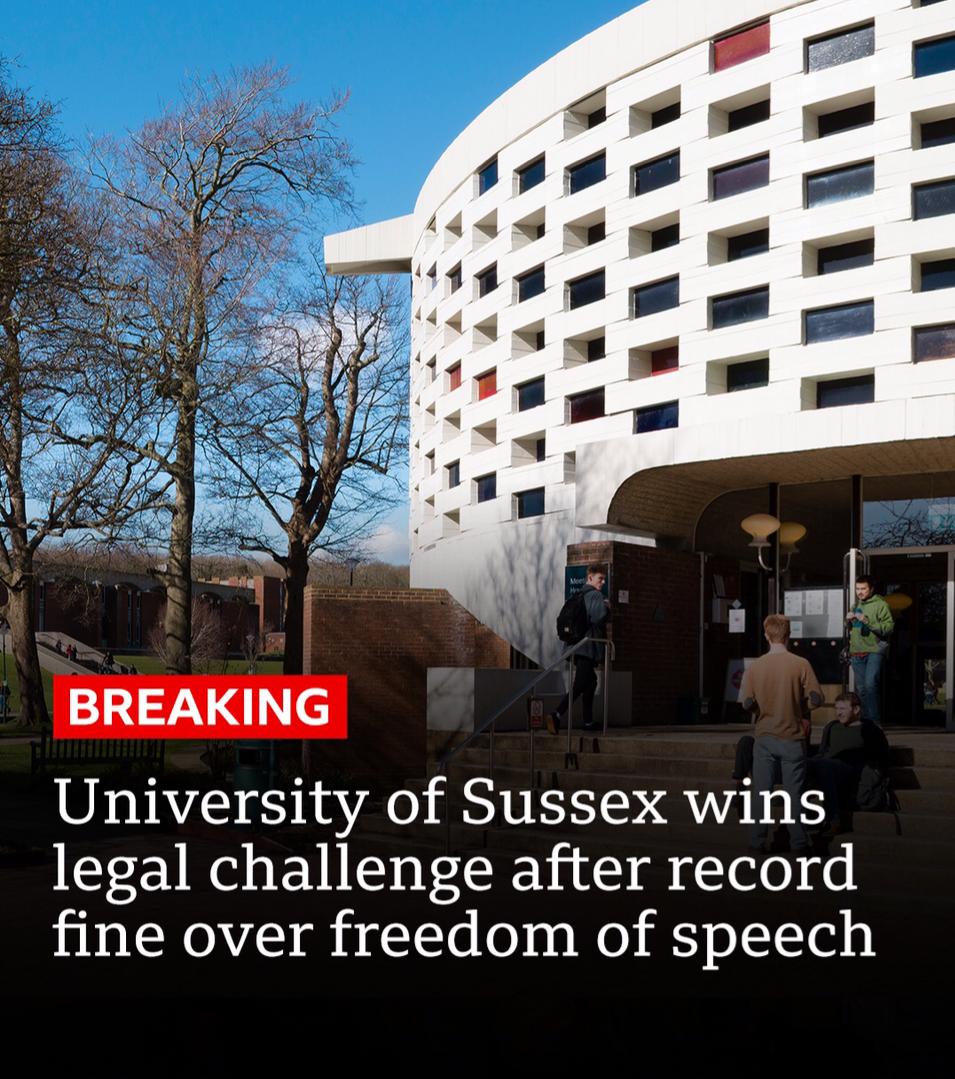
University Of Sussex Wins Legal Challenge Against Record £585,000 Free Speech Fine The University of Sussex in the United Kingdom has successfully overturned a record £585,000 fine imposed over alleged failures to uphold freedom of speech, marking a major legal victory for the institution and reigniting debate about academic freedom across British universities. The penalty had been issued by England’s higher education regulator, the Office for Students (OfS), following an investigation into the university’s policies on transgender and non-binary equality and their impact on academic expression.
However, a High Court ruling has now sided with the university, cancelling the sanction after judges rejected claims that the institution breached freedom-of-speech obligations. The case stemmed from controversy surrounding philosophy professor Kathleen Stock, who resigned from the university in 2021 after facing protests and criticism over her gender-identity views.
Regulators argued that the university’s equality policy which encouraged course materials to “positively represent trans people” and warned against “transphobic propaganda” created a chilling effect that discouraged open debate among staff and students. The Office for Students concluded that the policy risked limiting lawful academic discussion and imposed what became the largest free-speech fine ever issued to a UK university. Following a legal challenge, the High Court ruled in favour of the University of Sussex, effectively overturning the financial penalty. University leaders had argued that the regulator adopted an excessively rigid interpretation of free speech rules and failed to properly balance academic freedom with universities’ duties to prevent harassment and discrimination. Vice-Chancellor Professor Sasha Roseneil previously described the investigation as regulatory overreach and warned it could create conflicting legal responsibilities for universities attempting to protect both inclusion and free expression.
The case has drawn national attention because it coincides with tougher legislation introduced under the UK’s Higher Education Freedom of Speech Act 2023, which empowers regulators to fine institutions found to restrict lawful expression on campus. Supporters of stronger regulation argue universities must safeguard debate and prevent ideological censorship, while critics warn aggressive enforcement risks undermining efforts to maintain respectful learning environments. Analysts say the Sussex ruling may now shape how future free-speech disputes are handled across higher education institutions in Britain. Legal experts believe the judgment could limit the regulator’s ability to impose large penalties without clear evidence of suppressed academic speech.
The decision is expected to influence ongoing discussions about academic independence, campus activism, and the boundaries between inclusion policies and freedom of expression. For universities nationwide, the ruling signals that disciplinary action linked to free-speech controversies will likely face closer judicial scrutiny going forward.