Italian Peacekeepers Replace Jesus Statue In Southern Lebanon After Israeli Soldier’s Desecration
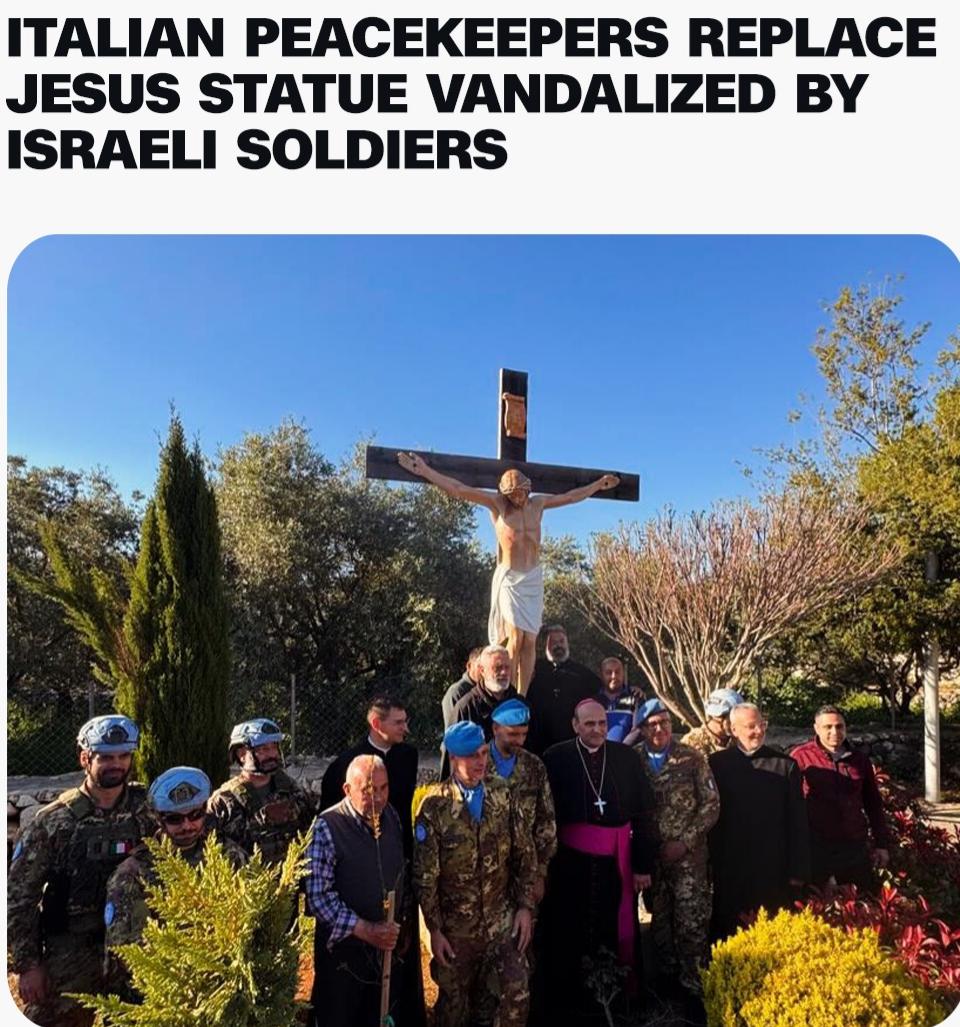
Italian peacekeepers replace Jesus statue in southern Lebanon after Israeli soldier’s desecration Italian UN peacekeepers have replaced a statue of Jesus Christ in a southern Lebanese village after an Israeli soldier was filmed damaging the religious figure with what appeared to be a hammer or axe, an incident that sparked international condemnation. The replacement was carried out by troops serving with the United Nations Interim Force in Lebanon (UNIFIL) in the Christian village of Debel, near the border with Israel, where the original statue had stood before being vandalised during recent military operations in the area. A widely circulated image showed an Israeli soldier striking the head of a crucified Jesus statue, prompting outrage from religious leaders, governments, and international organisations. The Israel Defense Forces (IDF) later confirmed the authenticity of the footage and said disciplinary action had been taken against those involved. In response to the incident, Italian peacekeepers coordinated with local community leaders to install a new crucifix at the same location where the original statue was destroyed. Italian Prime Minister Giorgia Meloni praised the intervention, thanking the Italian UNIFIL contingent for donating the replacement and describing the gesture as a “powerful message of hope, dialogue and peace.” The installation comes after the Israeli military removed two soldiers from combat duty and sentenced them to 30 days in detention over their involvement in the incident, while several other troops present at the scene are also under investigation for failing to intervene. The controversy has drawn global attention amid ongoing tensions along the Israel–Lebanon border. Religious leaders and political figures across Europe and the United States have condemned the desecration, calling for respect for religious symbols even in conflict zones.
UNIFIL, which has operated in southern Lebanon for decades, has increasingly found itself involved in community-level stabilization efforts as cross-border hostilities continue to affect civilian areas. While the replacement of the statue has been welcomed locally as a symbolic act of reconciliation, the broader incident continues to fuel diplomatic criticism and renewed calls for stricter protection of cultural and religious sites during military operations.