At Least Two Container Ships Hit By Gunfire In Strait Of Hormuz As Trump Extends Ceasefire With Iran
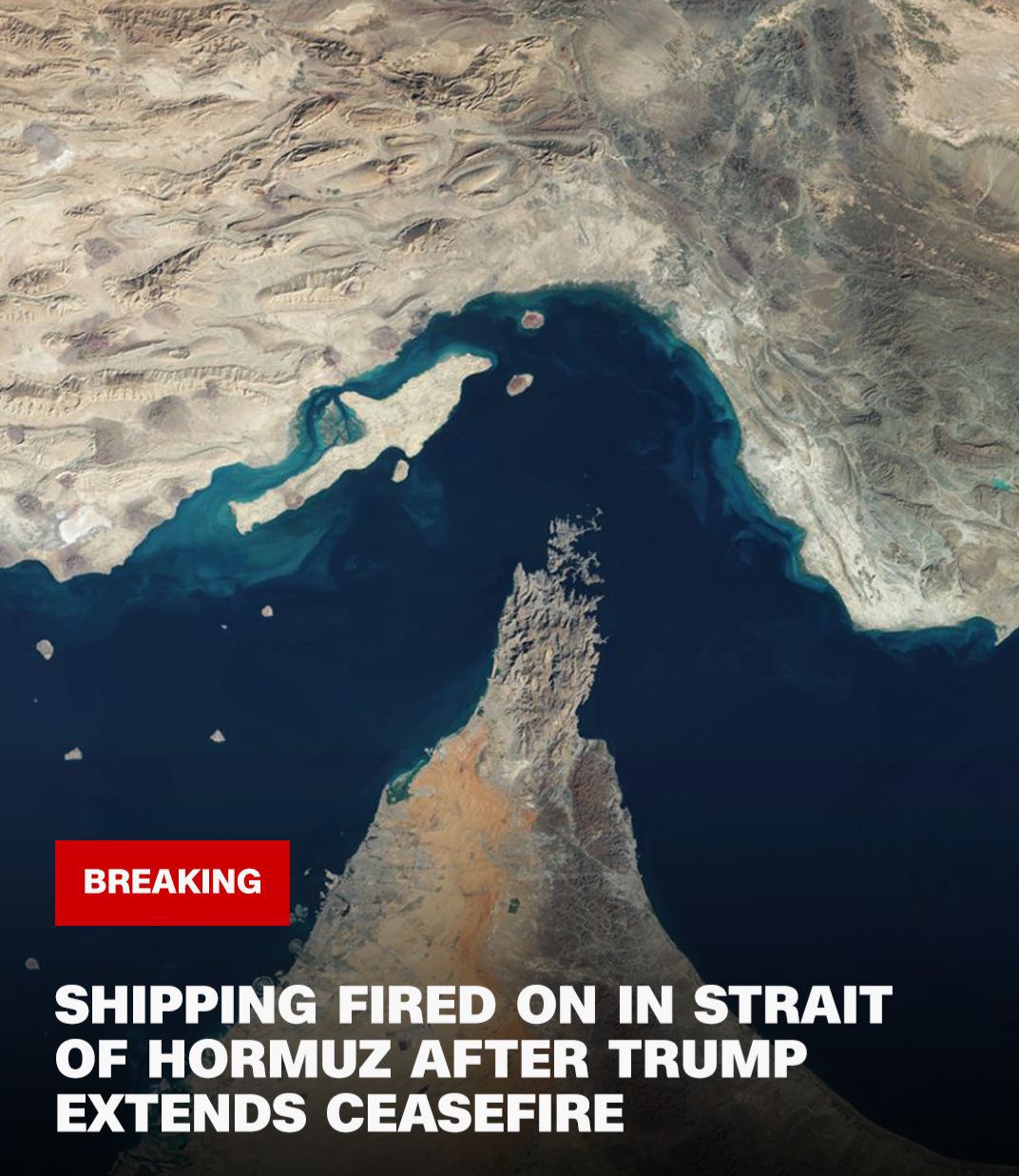
At least two container ships hit by gunfire in Strait of Hormuz as Trump extends ceasefire with Iran At least two container ships were struck by gunfire in the Strait of Hormuz, according to maritime security agencies, just hours after U.S. President Donald Trump announced an indefinite extension of the ceasefire with Iran following mediation efforts and ongoing tensions in the Gulf.
Maritime monitoring agencies have reported that at least two commercial vessels came under attack in the Strait of Hormuz, one of the world’s most critical oil shipping routes, amid escalating regional tensions involving Iran and the United States. The United Kingdom Maritime Trade Operations (UKMTO) said an Iranian Revolutionary Guard Corps (IRGC) gunboat opened fire on a container ship without prior warning, causing significant damage to the vessel’s bridge, though all crew members were reported safe. A second vessel was also reportedly fired upon in a separate incident shortly after, with maritime authorities confirming that the ship halted movement following the attack. No casualties have been reported so far. The incidents occurred just hours after President Donald Trump announced an indefinite extension of the ceasefire with Iran, following a request reportedly linked to Pakistani mediation efforts and concerns over Iran’s internal political divisions.
Iranian-linked media outlets and military sources have suggested the ships were targeted after allegedly ignoring warnings or operating without proper authorization in the strategically sensitive waterway.
- At least two commercial ships fired upon in Strait of Hormuz
- IRGC gunboat allegedly involved in first attack
- One vessel sustained damage to its bridge; crew reported safe
- Second ship stopped after coming under fire
- No confirmed casualties or environmental damage reported
The Strait of Hormuz is a vital global energy chokepoint, through which a significant portion of the world’s oil and gas shipments pass daily. Any disruption in the area often triggers immediate reactions in global oil markets and shipping insurance costs.
Recent weeks have seen heightened tensions due to military confrontations, ceasefire negotiations, and maritime restrictions affecting commercial shipping routes. The attacks come amid fragile diplomatic efforts between Washington and Tehran. The U.S. has extended a ceasefire while maintaining pressure through maritime enforcement measures, while Iran has linked negotiations to the lifting of certain blockades and restrictions.
Pakistan has reportedly played a mediating role in urging continued restraint to allow further diplomatic engagement. Maritime analysts warn that continued attacks on commercial shipping could further destabilize global energy markets and increase the risk of wider confrontation in the Gulf region, especially if diplomatic negotiations fail to progress.