FG, ASUU Seal New Deal, Agree 40% Pay Rise For University Lecturers
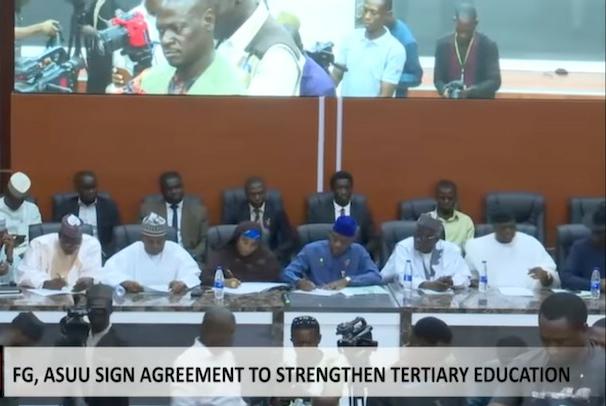
FG, ASUU Seal New Deal, Agree 40% Pay Rise for University Lecturers
Abuja, Nigeria — January 14 – 15, 2026
In a landmark agreement that promises to reshape Nigeria’s tertiary education landscape, the Federal Government and the Academic Staff Union of Universities (ASUU) have signed a new collective bargaining deal that includes a 40 per cent upward review of pay for federal university lecturers, ending years of protracted negotiations and recurring disruptions in the nation’s universities.
The agreement was formally unveiled in Abuja on Wednesday, with the Minister of Education, Dr. Tunji Alausa, presenting the deal and outlining key components aimed at elevating academic welfare, morale and global competitiveness.
Naija News
Key Components of the New Agreement
40 % Salary Increase
- The emoluments of academic staff in federal tertiary institutions will be increased by 40 per cent, effective January 1, 2026, as approved by the National Salaries, Incomes and Wages Commission (NSIWC).
The increase is largely implemented via the Consolidated Academic Tools Allowance (CATA), tailored to university lecturers and covers essential academic tools such as journal publications, conference participation, internet access, professional memberships, and book allowances—key to boosting research and teaching quality.
Structured Allowances - Nine previously earned academic allowances have been restructured into clearly defined, transparent components strictly tied to duties performed, including postgraduate supervision, fieldwork responsibilities, clinical duties, examinations, and leadership roles, to promote accountability and productivity.
New Professorial Cadre Allowance - For the first time, a Professorial Cadre Allowance has been introduced, recognising heavier administrative, research, and scholarly responsibilities borne by senior academics.
Channels Television
Professors are to receive an additional about ₦1.74 million per year (approx. ₦140,000 monthly).
Academic Readers will get roughly ₦840,000 per year (approx. ₦70,000 monthly).
Channels Television
Pensions and Funding Reforms
Beyond salaries, the deal also includes improved pension benefits and provisions to enhance university funding—such as allocations for research, laboratories, libraries, equipment, infrastructure, and staff training. Some reports indicate the proposed establishment of a National Research Council to fund research at a statutory minimum of 1 % of Nigeria’s GDP.
Background: Ending a Long Standstill
The 2025 ASUU–FG agreement marks the end of a 16-year renegotiation stalemate that originated from the 2009 collective bargaining agreement, which was due for review in 2012 but remained unresolved for years under successive administrations.
The West
Both sides lauded the outcome: • The Federal Government said the agreement reflects President Bola Ahmed Tinubu’s Renewed Hope Agenda, demonstrating a choice of dialogue over discord and a commitment to stability in the education sector. - ASUU President Prof. Chris Piwuna welcomed the breakthrough, while acknowledging that some systemic issues—such as university autonomy and governance reforms—remain ongoing concerns for the union.
PRNigeria News
authorityngr.com
Implications for Nigeria’s University System
Industrial Harmony: The deal is expected to significantly reduce disruptions from labour disputes, giving students and parents confidence in uninterrupted academic calendars.
Academic Welfare: Enhanced remuneration and structured allowances aim to improve morale, reduce brain drain, and align lecturers’ compensation with global standards.
Research & Competitiveness: By strengthening research supports and academic funding mechanisms, the agreement could boost Nigeria’s position in the global knowledge economy.
Implementation has already begun, with the National Salaries, Incomes and Wages Commission issuing circulars for the new wage structure. Both the Federal Government and ASUU have urged good faith execution of the agreement, stressing that industrial peace will depend on consistent, transparent implementation.