China To Ban Storing Cremated Remains In Apartments Amid Rising Burial Costs
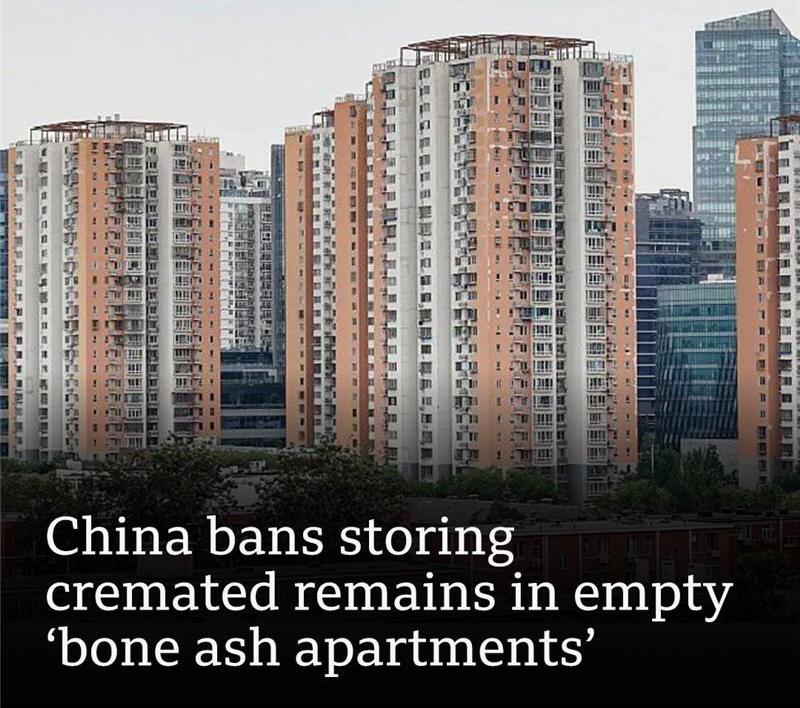
China to ban storing cremated remains in apartments amid rising burial costs The Chinese government is set to ban people from storing the cremated remains of their loved ones in empty apartments, in a move aimed at regulating burial practices and addressing growing pressure on cemetery space.
The new legislation targets so-called “bone ash apartments” residential properties that families have been using as makeshift memorial spaces instead of purchasing expensive cemetery plots. Authorities say the law will prohibit the use of residential housing specifically for storing human ashes, as well as banning burials or tomb construction outside designated public cemeteries or approved ecological burial areas. The practice has become increasingly common in recent years due to soaring funeral costs and a shortage of cemetery land, particularly in densely populated cities. Many families have turned to empty apartments as a cheaper alternative, transforming them into private ancestral shrines with urns, candles and memorial displays.In some cases, falling property prices have made buying or renting unused apartments more affordable than securing a burial plot, which often comes with high fees and limited lease periods.
China’s rapidly ageing population and rising death rate have further intensified demand for burial space, putting additional strain on existing cemeteries. Officials say the new rules are also intended to bring greater oversight to the funeral industry, including tackling high costs and improving transparency for grieving families. However, the move has sparked debate online, with some questioning how authorities will enforce the ban and others arguing that families resort to such practices because traditional burial options remain unaffordable. The regulation comes ahead of the Qingming Festival a traditional period when families in China honour their ancestors by visiting graves and making offerings highlighting the cultural sensitivity surrounding burial practices in the country.