Israel Says It Killed Key Iranian Commander Linked To Strait Of Hormuz Blockade
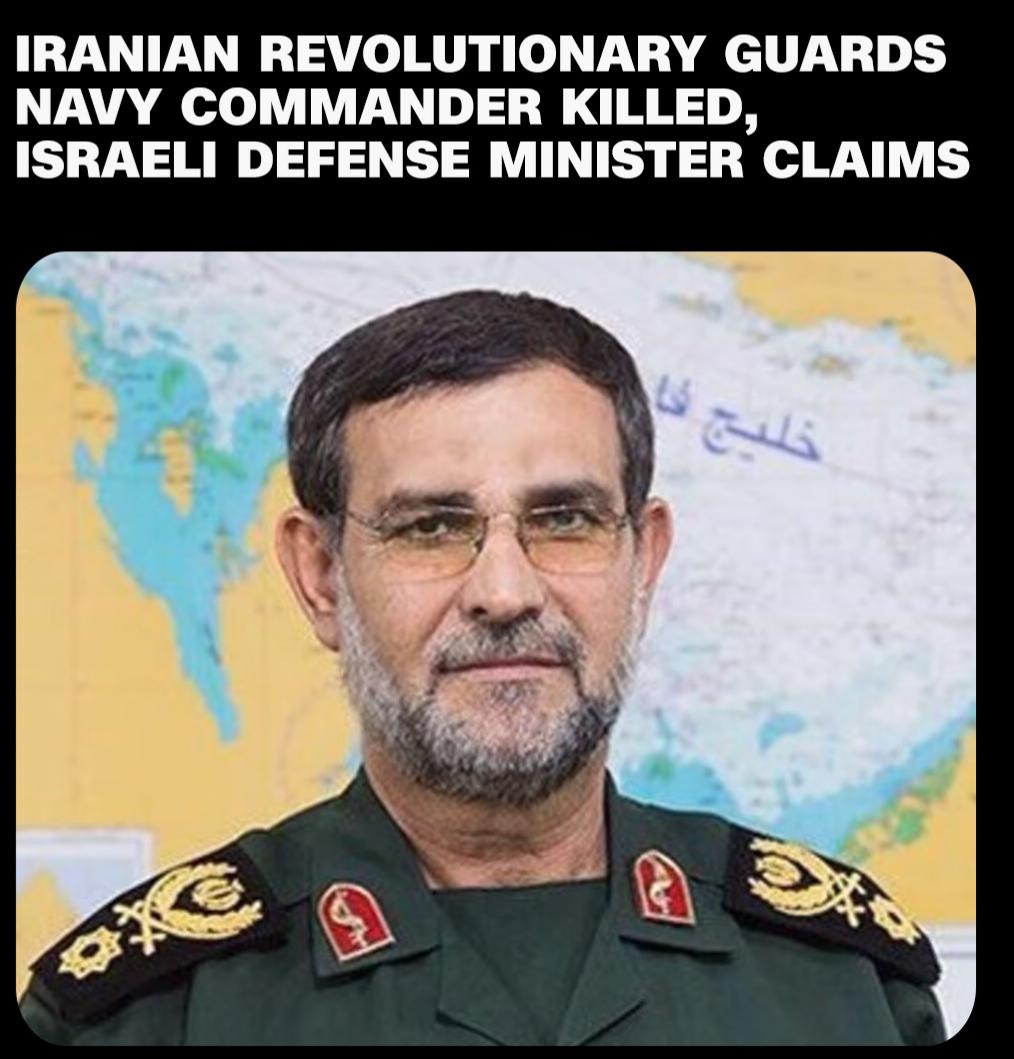
Israel Says It Killed Key Iranian Commander Linked to Strait of Hormuz Blockade Israel has announced the killing of a top Iranian military commander accused of orchestrating the near-total disruption of shipping traffic through the strategic Strait of Hormuz, in a move that marks a major escalation in the ongoing Middle East conflict Israeli officials said the strike eliminated Rear Admiral Alireza Tangsiri, the head of Iran’s Islamic Revolutionary Guard Corps (IRGC) Navy, describing him as a central figure behind efforts to block maritime traffic in the vital oil transit corridor. According to Israeli authorities, the commander was “directly responsible” for operations that restricted access to the strait, including attacks and obstruction of commercial shipping.
The United States later confirmed his death, adding weight to Israel’s claims about the operation. The Strait of Hormuz through which roughly 20% of global oil supply passes has been at the centre of escalating tensions in recent weeks.
Tangsiri was widely regarded as the architect of Iran’s maritime strategy, overseeing:
- Deployment of naval mines and fast-attack vessels
- Disruption of commercial tanker routes
- Enforcement of restrictions on vessels linked to the U.S. and its allies
Israeli officials claim his leadership enabled a near-total blockade, severely impacting global shipping and energy markets. While Israel and U.S. officials have confirmed the strike, Iranian authorities have not formally acknowledged the killing, leaving some uncertainty over Tehran’s immediate response.
However, Iranian forces have continued to signal defiance, recently declaring restrictions on vessels tied to Western allies in the strait. The killing forms part of a broader Israeli campaign targeting Iran’s military leadership and infrastructure amid the ongoing conflict. Tangsiri had reportedly expanded Iran’s naval capabilities, including missiles and drone systems, and played a key role in regional maritime operations.
His death is seen by Israel as a strategic step toward weakening Iran’s ability to control critical waterways. The disruption in the Strait of Hormuz has already had major global consequences, including:
- Sharp increases in oil prices
- Rising shipping insurance costs
- Heightened military presence in the Gulf
Analysts warn that continued instability could further strain global energy supply chains and trigger broader economic fallout
The strike is likely to intensify tensions between Israel and Iran, with fears of retaliation and further military escalation.
The conflict has already expanded beyond direct strikes, involving:
- Attacks on regional infrastructure
- Proxy engagements across the Middle East
- Increased involvement of global powers
While Israel views the killing as a tactical success, experts caution that it may not immediately end disruptions in the Strait of Hormuz.
Attention is now focused on:
- Whether shipping lanes will reopen
- Iran’s potential retaliation
- The next phase of the escalating regional conflict
The situation remains fluid, with global markets and governments closely monitoring developments in one of the world’s most critical energy corridors.