Israel Says Iran’s Security Chief Ali Larijani Killed In Airstrike
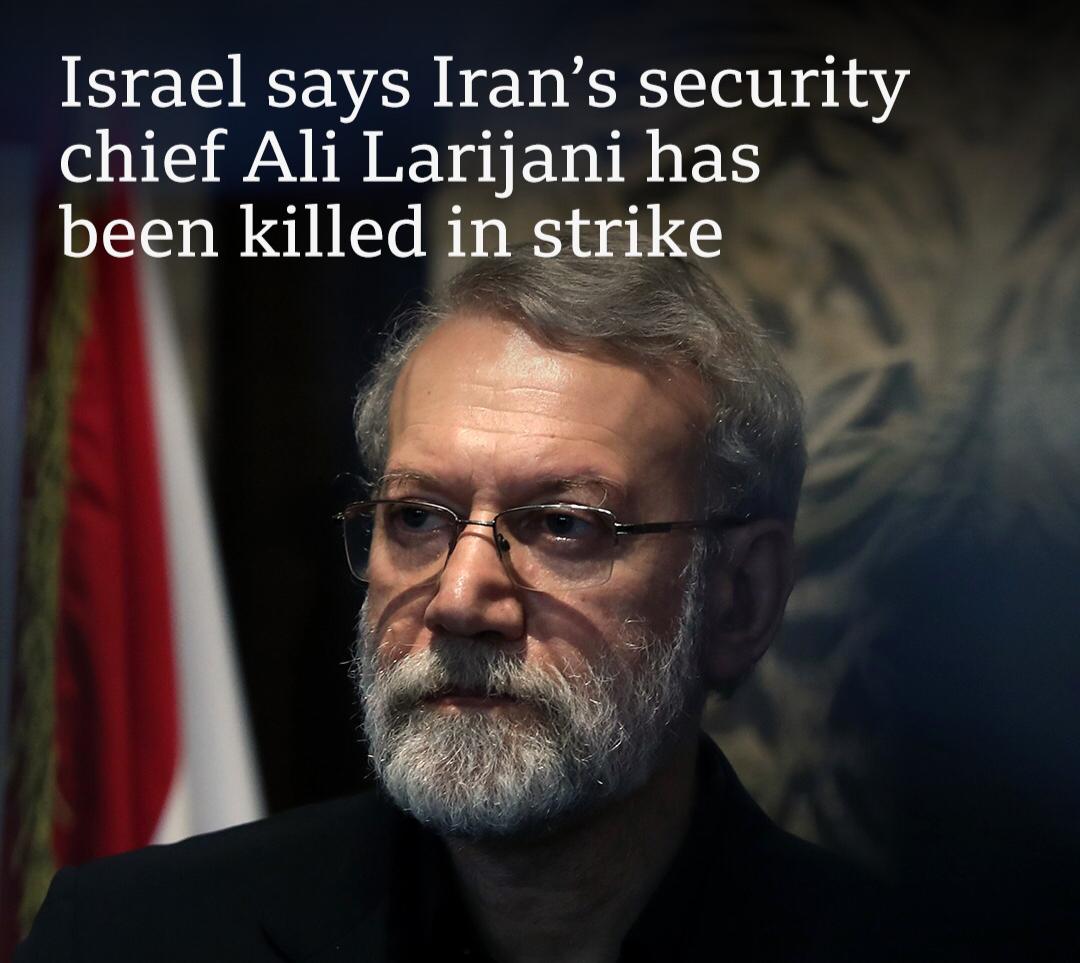
Israel Says Iran’s Security Chief Ali Larijani Killed in Airstrike; Tehran Yet to Confirm Israel’s Defence Minister has announced that Ali Larijani, the head of Iran’s Supreme National Security Council and one of the Islamic Republic’s most senior officials, was killed in an overnight Israeli airstrike a claim that, if confirmed, would represent one of the deadliest targeted killings of Iranian leadership in the ongoing regional conflict. Iran has not yet officially confirmed the report.According to Israeli authorities, Larijani was killed during a series of precision strikes in Tehran carried out by the Israeli Air Force based on intelligence targeting senior Iranian military and security figures. The defence minister also said that Gholamreza Soleimani, commander of Iran’s Basij militia force, was killed in a separate strike. Larijani, 67, was secretary of Iran’s Supreme National Security Council a powerful position that placed him at the centre of Tehran’s strategic planning, defense policy, and regional alliance operations. He has played key roles in navigating Iran’s responses to external military pressure and in structuring Iran’s defense strategy throughout the current conflict. Israeli officials described the strike as part of a broader campaign to dismantle the leadership of Tehran’s security establishment, characterizing it as a severe blow to Iran’s strategic capabilities. The claim of Larijani’s death marks a significant escalation in the nearly three‑week conflict, which has already seen intense hostilities and numerous casualties on both sides. However, independent confirmation is lacking, and Iranian state media has yet to issue a definitive statement on Larijani’s fate. Past live conflicts have shown that early battlefield reports can be contested or corrected as further verification becomes available. The death of a senior security leader of Larijani’s stature would overshadow recent losses in the conflict and could have deep ramifications within Iran’s political and military command structure, particularly following the earlier death of Supreme Leader Ali Khamenei at the outset of the war Larijani, a veteran Iranian politician and former nuclear negotiator, held major influence in Tehran’s strategic decision‑making apparatus. His portfolio traditionally bridged political, defense, and diplomatic functions—making him among the most consequential officials in Iran outside formal executive titles. The ongoing Middle East conflict has been marked by intense air, missile, and drone exchanges between Israeli, Iranian, and allied forces across multiple fronts, including strikes deep inside Iran, Lebanese frontlines, and assaults on Gulf navigation routes. Several Iranian generals and security chiefs have been reported killed in recent strikes, significantly disrupting Tehran’s military hierarchy. Global reactions have been swift but mixed. Some nations have condemned the escalation and urged restraint, while others have called for verification and constructive diplomacy to avert further destabilisation of the region. Major powers have expressed concern over the implications of top leadership casualties in an already volatile conflict. reporting ongoing.
The reported death of Ali Larijani in an Israeli attack still unverified by Iranian sources would mark a pivotal moment in the Middle East conflict, heightening tensions and raising questions about the future trajectory of hostilities and diplomatic negotiations. As officials from both sides continue to issue contrasting accounts, the international community is watching closely for confirmation and its wider geopolitical impacts.