Iran’s Supreme Leader Says Strait Of Hormuz Will Stay Closed As “Tool Of Pressure” In First Public Remarks
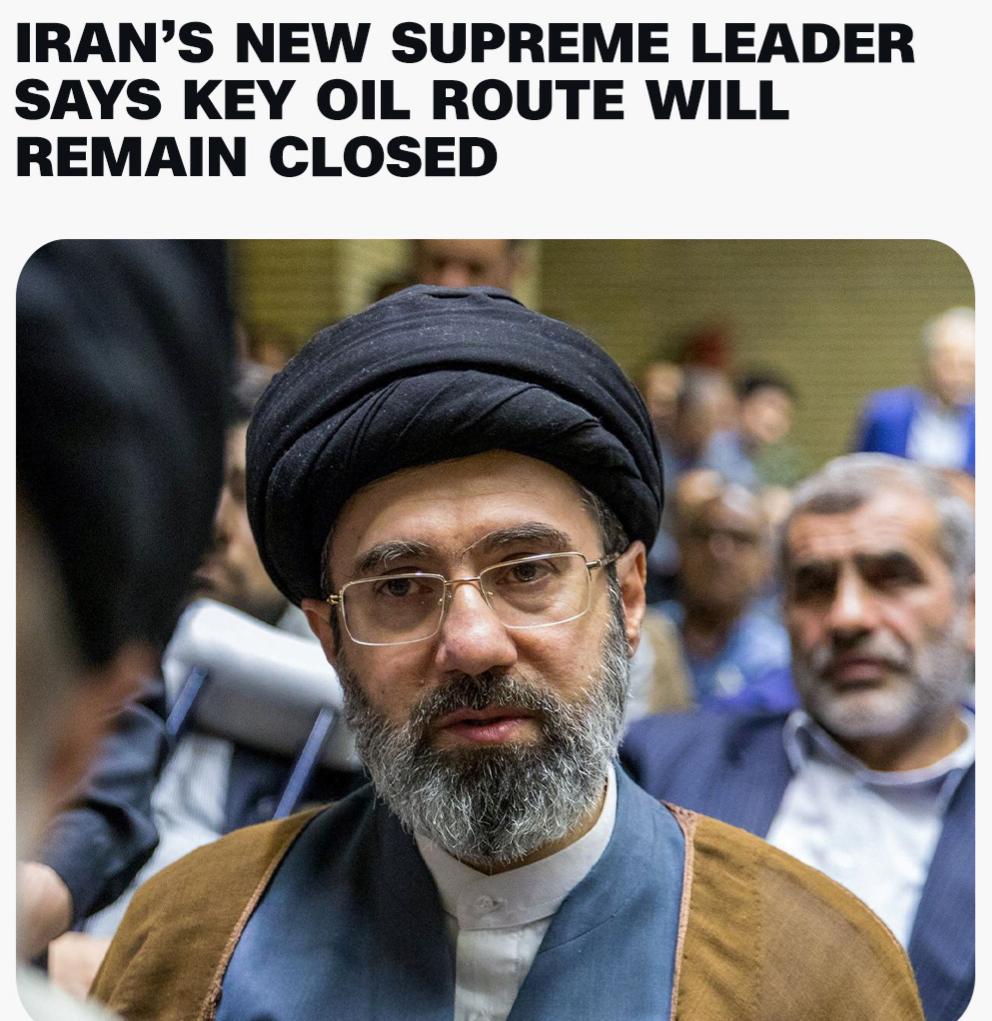
Iran’s Supreme Leader Says Strait of Hormuz Will Stay Closed as “Tool of Pressure” in First Public Remarks Iran’s newly appointed Supreme Leader, Ayatollah Mojtaba Khamenei, declared on 12 March 2026 that the Strait of Hormuz will remain closed and used as a “tool of pressure” against Iran’s adversaries, marking his first public statement since assuming leadership of the Islamic Republic. The message was read on Iranian state television rather than delivered in person, underscoring ongoing uncertainty about his public visibility. Khamenei’s remarks come amid the escalating Iran–United States–Israel conflict, in which Tehran has effectively halted most commercial shipping through the strategically vital waterway a chokepoint that normally carries about 20 % of global oil exports.
- In the statement, Khamenei said keeping the strait closed would apply leverage to countries opposed to Iran’s interests, reflecting a continued hardline approach to the war that erupted after the killing of his predecessor, Ayatollah Ali Khamenei, in a U.S.–Israeli strike.
- He also said all U.S. military bases in the region should be shut down, adding that those bases would be targeted if they remained operational, reinforcing Iran’s confrontational posture. Mojtaba Khamenei’s first statement came days after the clerical Assembly of Experts confirmed his appointment to succeed his father. Unlike typical leadership addresses, it was broadcast by a newsreader rather than appearing live, continuing speculation about his personal condition and public presence. The Strait of Hormuz’s closure has already had significant economic and geopolitical repercussions:
- Oil prices surged, with benchmark crude climbing above $100 a barrel as markets reacted to the threatened disruption of supply.
- The halt in shipping through the strait has been described as one of the largest disruptions to global oil and gas flows in decades, prompting energy security concerns worldwide.
- Regional powers and Western nations have expressed alarm, with ongoing diplomatic efforts to mitigate escalation even as fighting continues across the Middle East.
The closure follows weeks of intense military exchanges between Iran and U.S.–Israeli forces, with Iran responding to strikes with missile and drone attacks on targets across the region. Analysts say the strait’s closure whether partial or full dramatically raises risks for international trade and energy markets.
The Strait of Hormuz is an international waterway between Iran, Oman and the United Arab Emirates, and any prolonged closure threatens deep disruption to global energy flows and economic stability.