Iran’s New Supreme Leader Mojtaba Khamenei Issues First Public Statement Amid War
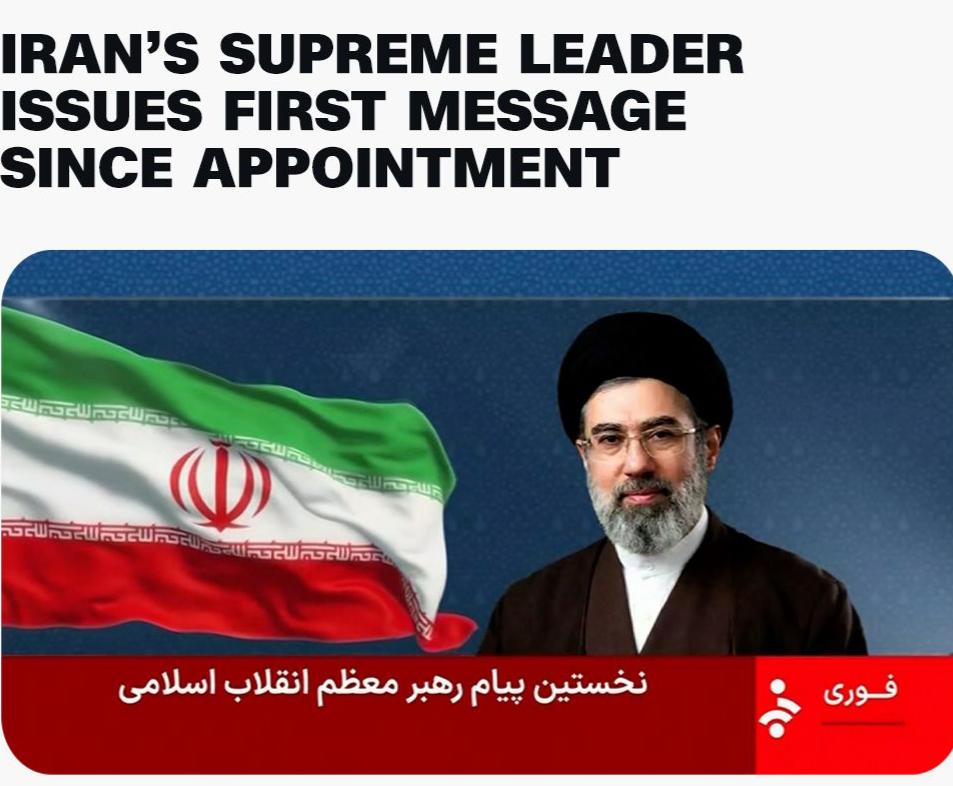
Iran’s newly appointed Supreme Leader, Ayatollah Mojtaba Khamenei, has issued his first message since taking power, delivered in written form and read by a presenter on Iranian state television, signalling a defiant posture in the ongoing conflict with the United States and Israel. Khamenei, chosen by Iran’s clerical Assembly of Experts on 8 March 2026 to succeed his father, the late Ayatollah Ali Khamenei, has not appeared in person or on video since his appointment fuelling speculation about his health and whereabouts during the escalating war. In the address read aloud on state TV, Khamenei struck a hardline tone, vowing to:
- Keep the strategic Strait of Hormuz closed as leverage against Western and Israeli pressure, a move that could further disrupt global oil flows.
- Demand that all U.S. military bases in the region be shut down, warning they would be attacked if they remain.
- Express gratitude to Iran’s military and fighters for resisting foreign aggression, pledging to “make the enemy regret its actions.”
The message emphasised national unity and resistance against external forces, framing the struggle as defensive and justified amid what Tehran describes as ongoing foreign assaults Khamenei’s succession followed the death of his father in late February during the opening strikes of the conflict with the U.S. and Israel, an event that plunged Iran into intensified hostilities.
The Assembly of Experts, a powerful clerical body, swiftly elected the 56‑year‑old Mojtaba Khamenei a previously low‑profile figure with strong ties to Iran’s military and clerical establishment as the third Supreme Leader of the Islamic Republic. Since the appointment, concerns have spread internationally and online about his health, as he has not made any public appearances. Some reports suggest he may have been wounded during early conflict operations and is in a secure, undisclosed location, though Iran’s government has not provided detailed confirmation. The first message was released amid heightened tensions across the Middle East:
- Energy markets reacted to Iran’s vow to leverage the Strait of Hormuz, a crucial shipping lane for global oil supplies.
- Regional powers and Western nations have expressed concern over the conflict’s potential to escalate further and widen.
- Leaders allied with Tehran have reiterated support, while Western governments continue to monitor developments closely.
External analysts view the message as reflective of a continuity in Iran’s hardline policies, aligning with its decades‑long resistance to U.S. and Israeli influence in the region. This televised reading rather than a live appearance has drawn particular attention. It underscores both the urgency with which the new leadership is trying to assert authority, and the unusual opacity surrounding his personal visibility.The statement also sets the tone for Iran’s strategic direction under Khamenei’s leadership, signalling persistence in the current geopolitical confrontation rather than efforts at de‑escalation.