Trump Warns Iran’s Next Supreme Leader ‘Won’t Last Long’ Without US Approval
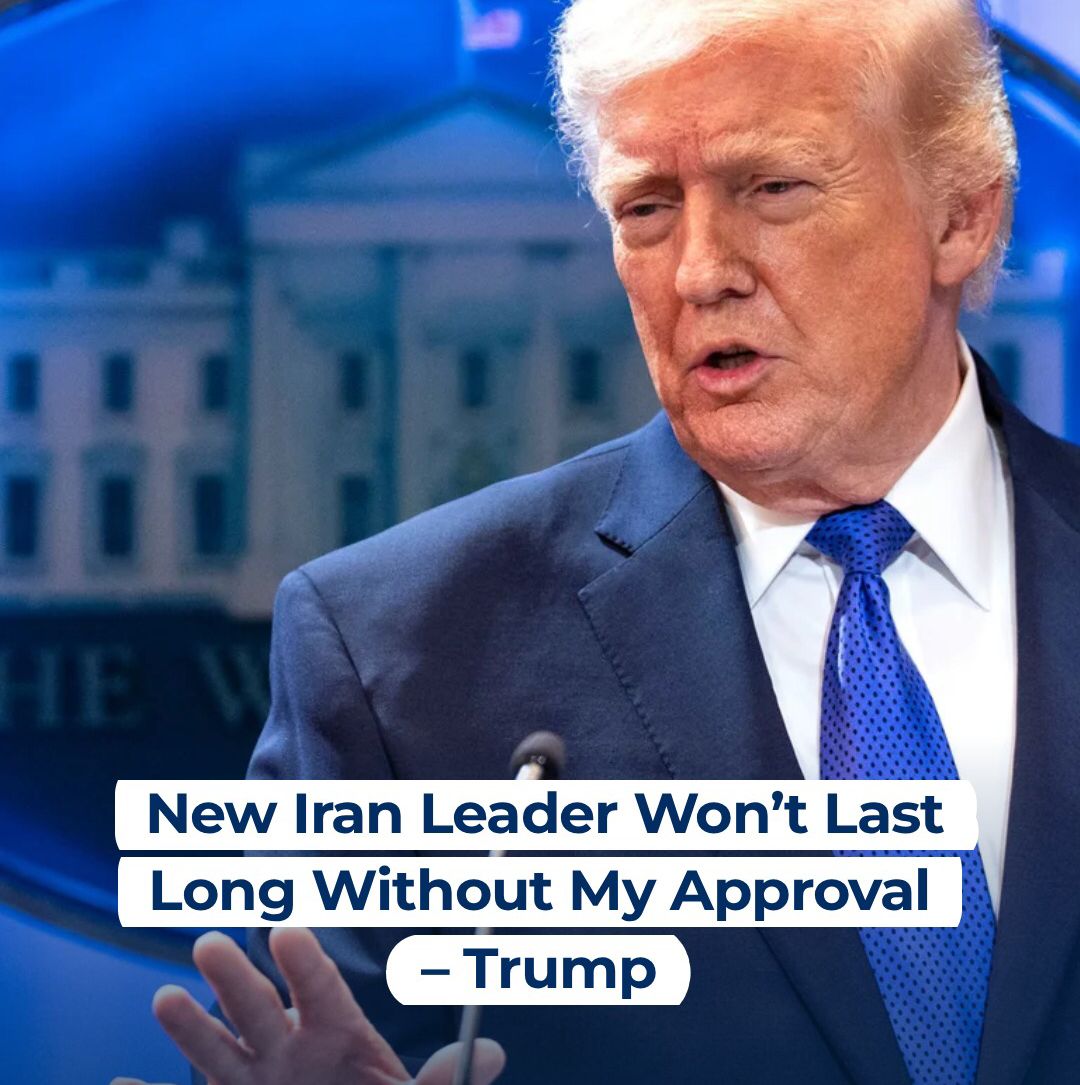
Washington, D.C. United States President Donald Trump warned on Sunday that Iran’s next supreme leader would not remain in power without approval from Washington, as Tehran prepared to announce the successor to slain Iranian leader Ali Khamenei. The remarks came as the conflict between Iran, the United States and Israel entered its second week, intensifying political tensions across the Middle East. Speaking in an interview with Trump said whoever assumes Iran’s highest political and religious office would need the backing of the United States to survive in power The U.S. president added that he wanted to avoid a future situation in which Washington might have to return to military confrontation with Iran. According to Trump, the goal is to ensure that Iran does not rebuild its nuclear capabilities or threaten regional stability Trump’s comments came as Iran’s Assembly of Experts prepared to reveal a successor following the death of longtime supreme leader Ali Khamenei, who was killed during the ongoing conflict with U.S. and Israeli forces.
Iranian officials confirmed that the clerical body had already gathered votes for the next leader but delayed publicly naming the successor due to wartime conditions. Several figures had been mentioned as potential candidates, including Khamenei’s son Mojtaba Khamenei, a powerful cleric with close ties to Iran’s conservative establishment. Iranian officials strongly rejected Trump’s remarks, insisting that choosing the country’s leader is strictly an internal matter. Foreign Minister Abbas Araghchi said Tehran would not allow any foreign country to interfere in its domestic political decisions. The comments reflect the widening political confrontation between Tehran and Washington as military operations and retaliatory strikes continue across the region. The war began after the United States and Israel launched air strikes targeting Iranian military and nuclear facilities. Iran has since retaliated with missile and drone attacks across the region, targeting Israeli territory and infrastructure in Gulf countries that host U.S. military bases. The conflict has raised fears of a wider regional war and has already triggered global economic effects, including sharp increases in oil prices. Political analysts say the appointment of a new Iranian supreme leader could shape the next phase of the crisis. If a hardline figure takes power, tensions with the United States and Israel could deepen, while a more pragmatic leader might open the door for negotiations aimed at ending the conflict.