Scientists Warn Emperor Penguins’ Annual Moult May Now Be Deadly
by HEDNEWS on February 25, 2026
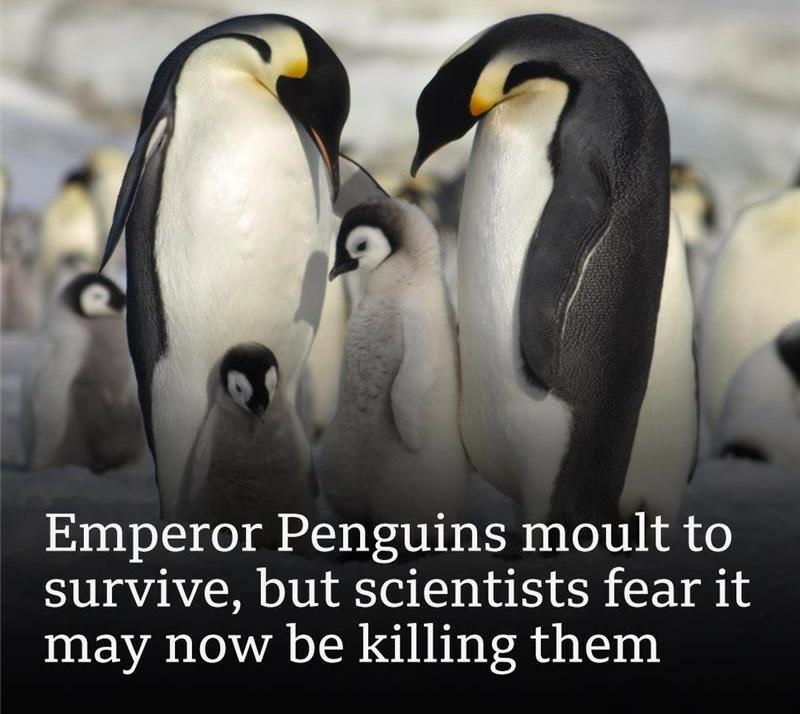
Scientists warn emperor penguins’ annual moult may now be deadly Researchers say the yearly process when emperor penguins shed and regrow all their feathers a time when they are vulnerable and unable to swim or hunt is now becoming a life threatening event because of shrinking Antarctic sea ice.
- Emperor penguins undergo a “catastrophic moult” each summer in which they lose every feather and grow a new waterproof coat.
- During this weeks-long process (roughly 4–5 weeks), the birds cannot enter the sea to feed they instead rely on fat they built up beforehand.
- Traditionally, they chose stable sea-ice areas for this vulnerable phase, but climate-induced ice losses are disrupting this life cycle.
- Scientists from the British Antarctic Survey found moulting emperor penguins in remote Marie Byrd Land using satellite data, revealing how their traditional ice platforms are disappearing.
- Ice cover in key areas has plunged to record lows for example, historical sea-ice extents once around 500,000 km² have shrunk to about 100,000 km² in some regions forcing penguins into smaller, crowded spaces.
- If sea ice breaks up before molt is complete, penguins must enter the freezing sea without waterproof feathers leading to energy exhaustion, hypothermia and higher predation risk.
- Scientists acknowledge they aren’t yet certain how many penguins have died this way, but the possibility of mass losses remains a grave concern.
- Earlier research showed emperor penguin numbers have dropped nearly 25 % as Antarctic sea ice recedes, with warming trends ongoing.
- At current warming rates, projections suggest there’s up to a 45 % chance the species could become extinct by the end of the century if conditions worsen
- This is the first time scientists have directly observed moulting colonies from space, by spotting distinct brown feather patches on the ice indicating where adults were undergoing molt.
- The technique offers researchers a new way to monitor critical life-cycle stages that are otherwise hard to study on the ground.