Indian University Faces Backlash And Removal After Chinese‑made Robot Dog
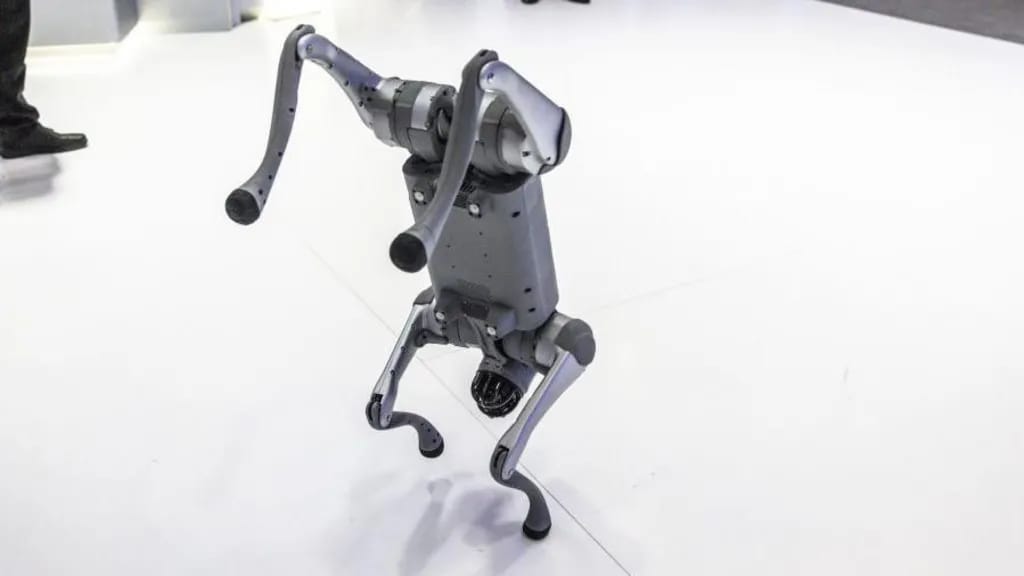
Indian university faces backlash and removal after Chinese‑made robot dog presented as its own at AI summit New Delhi, India An academic showcase at the prestigious India AI Impact Summit 2026 turned into a public relations backlash on Wednesday after a professor from Galgotias University was seen presenting a Chinese‑made robotic dog as if it were a creation developed by the university a claim that quickly drew sharp criticism online and embarrassment for India’s effort to position itself as an AI leader. At the summit held at Bharat Mandapam in New Delhi, a professor from Galgotias University introduced a robodog called “Orion” during a media interaction, reportedly stating that it was developed by the institution’s Centre of Excellence under its AI initiative.
Social media users rapidly identified the robot as the Unitree Go2, a commercially available robot dog made by China’s Unitree Robotics, widely sold and recognised in research and education circles not an indigenous product created by the university.
A video clip of the professor’s remarks went viral on social media, prompting swift online criticism that the institution was attempting to pass off imported technology as its own achievement at a summit meant to showcase genuine Indian innovation.
Sources said Galgotias University was asked to vacate its exhibition stall at the summit after the row erupted with pavilion lights reportedly disconnected amid the controversy. Organisers emphasised that exhibitors should not promote work they had not actually produced. Opposition leaders criticised the summit as a “PR spectacle” and accused the government of damaging India’s credibility in AI by allowing such misrepresentation at a high‑profile event attended by global tech leaders. Galgotias University has issued two statements attempting to address the situation:
The first statement said the robodog was acquired for student learning and experimentation, not developed in‑house, and the professor’s remarks were ill‑informed and not officially authorised.
A second press release apologised for the confusion, saying there was no institutional intent to misrepresent innovation and emphasising a commitment to academic integrity and transparency. University officials stressed the device was being used as a hands‑on educational tool as part of their broader investment in artificial intelligence and robotics training and not presented as a proprietary invention. Experts and attendees quickly identified the robot as the Unitree Go2 a commercially available AI‑enabled robotic quadruped sold internationally and widely used for research, education and hobbyist robotics.
Prices for the Unitree Go2 typically range around ₹2–3 lakh ($1,600–$2,800), and the model has been publicly documented online, making its origin easy to verify once the video circulated.
The row has sparked a wider discussion about transparency and credibility in academic showcases and technology events, particularly as India seeks to brand itself as a global hub for AI innovation. Observers noted that while technology exhibitions often feature imported tools for demonstration and educational purposes, clear attribution of origin is crucial especially at flagship summits attended by world leaders and top industry executives. The India AI Impact Summit, billed as a global South AI leadership forum, brought together heads of state, CEOs from major tech firms and policymakers from across the world. The event aims to position India at the centre of artificial intelligence research, investment and capacity building. However, the startup theft allegations, crowd management issues and the robodog controversy collectively drew attention away from the summit’s core objectives, highlighting challenges in execution and narrative control. For Galgotias University: A reputational challenge that underscores the importance of clear communication and intellectual honesty in tech showcases.
For the AI Summit A lesson in ensuring exhibitors accurately attribute technology origins to maintain credibility.
For India’s AI ambitions: A reminder that as global eyes watch India’s push in advanced tech, transparency and authenticity will be essential to backing its claims as a future AI powerhouse.