MEDIA STAKEHOLDERS URGE FG & NATIONAL ASSEMBLY TO PROTECT
by HEDNEWS on February 4, 2026
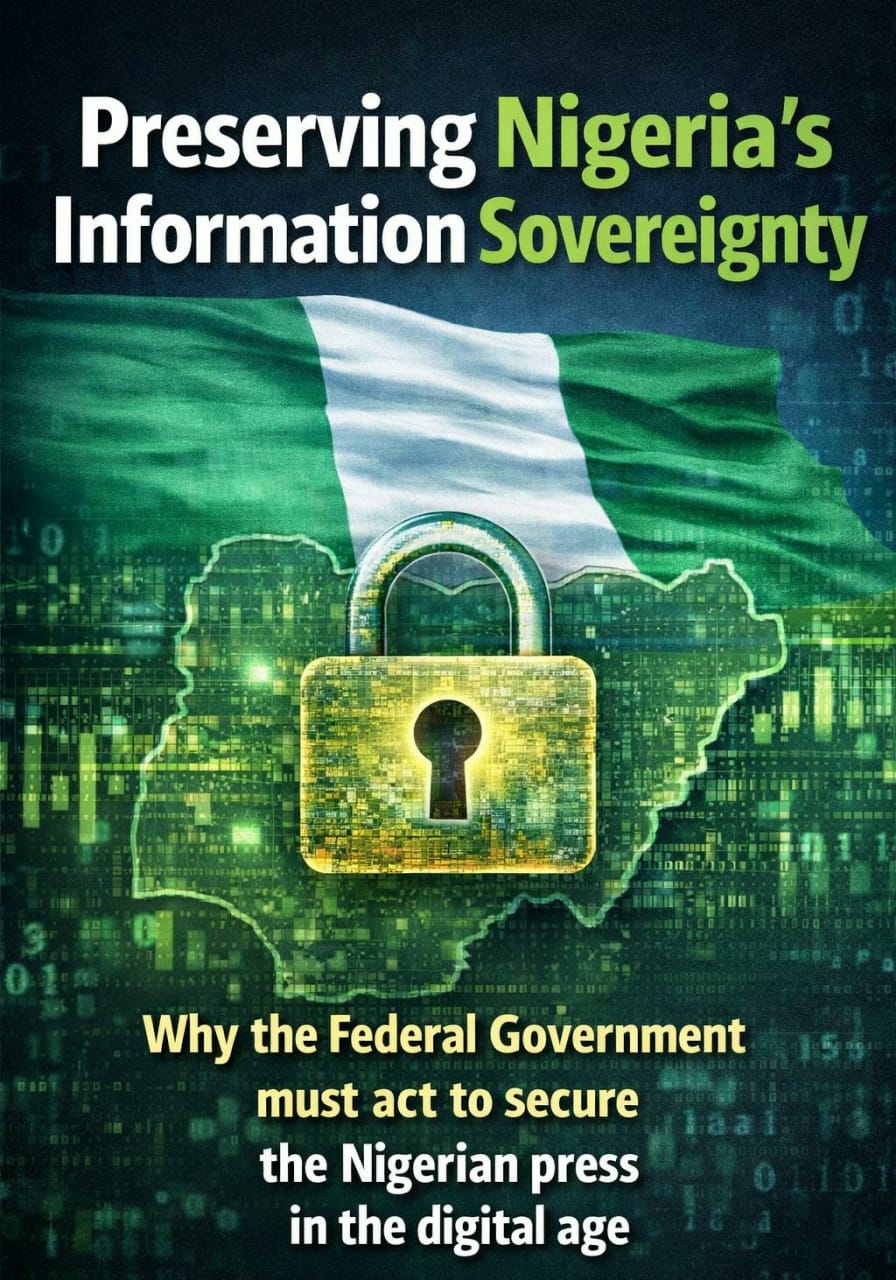
MEDIA STAKEHOLDERS URGE FG & NATIONAL ASSEMBLY TO PROTECT NIGERIA’S INFORMATION SOVEREIGNTY AMID DIGITAL THREATS
Under the Nigerian Press Organisation (NPO), media groups call for urgent action to safeguard the nation’s information ecosystem against dominance by unregulated global digital platforms.
- Call for Urgent Government Action
Major media industry bodies under the Nigerian Press Organisation (NPO) including the Newspaper Proprietors’ Association of Nigeria (NPAN), the Nigerian Guild of Editors (NGE), the Broadcasting Organisations of Nigeria (BON), the Guild of Corporate Online Publishers (GOCOP) and the Nigerian Union of Journalists (NUJ) have urged the Federal Government and National Assembly to urgently protect Nigeria’s information sovereignty. In a public statement yesterday, the stakeholders warned that Nigeria is at a critical point in its democratic and digital evolution, with decisions taken now poised to shape the nation’s future social cohesion, national security, and democratic governance. - Concerns Over Global Digital Platform Dominance
The group highlighted that global digital platforms now dominate digital advertising revenue and control content visibility through algorithms operated outside Nigeria, creating a structural imbalance of power that undermines the economic sustainability of professional journalism a key pillar of informed citizenship and accountable governance.
They noted that while global platforms have expanded access and innovation, they also determine what Nigerians see, amplify or ignore in the information space often with commercial motivations that do not reinvest equitably in local news ecosystems. - Strategic National Security and Social Stability Risk
Describing the situation as a national security and social stability concern, the NPO warned that when trusted news institutions weaken, misinformation, disinformation and digitally manipulated narratives can spread unchecked, exacerbating polarisation, mobilising grievances and fuelling insecurity in Nigeria’s multi-ethnic, multi-religious federation.
They emphasised that no counterterrorism, policing or intelligence framework can fully substitute for a sound national information order once it collapses. - Journalism as Strategic National Infrastructure
The media stakeholders described professional journalism not merely as an economic activity but as strategic civic infrastructure comparable in importance to education, public health and the judiciary because credible journalism supports democracy and public accountability. - Nigerian-Designed Legal Framework Proposed
The group proposed the adoption of a Nigerian-designed legal framework through new or amended digital legislation to correct extreme bargaining power imbalances in Nigeria’s information market and ensure fair remuneration for Nigerian news content, while also preserving innovation, competition and consumer choice. They urged utilisation of existing authorities like the Federal Competition and Consumer Protection Commission (FCCPC) and the Nigerian Copyright Commission (NCC) to enforce proportionate remedies against abuses by dominant global platforms. The NPO pointed to the growing trend where digital platforms monetise Nigerian news at scale but retain profits offshore without proportionate reinvestment in local journalism weakening the economic base of Nigerian newsrooms and making them more vulnerable to collapse.
In their position paper, the stakeholders referenced digital regulation models from economies such as the European Union (EU), United Kingdom (UK), Australia and South Africa, where digital competition rules and news bargaining frameworks have been used to rebalance power between global platforms and local media. The NPO warned that democratic processes, including elections, public accountability and citizen participation, depend on reliable information. When journalism is displaced by algorithm-driven content virality lacking verification, democratic systems become susceptible to manipulation, foreign influence, and coordinated falsehoods. The stakeholders observed that constitutional protections for press freedom are insufficient if the economic viability of media organisations is undermined. Without sustainable revenue, newsrooms struggle to pay salaries, fund investigations, and retain skilled journalists, eroding national capacity and institutional memory.