Israel Authorises Partial Reopening
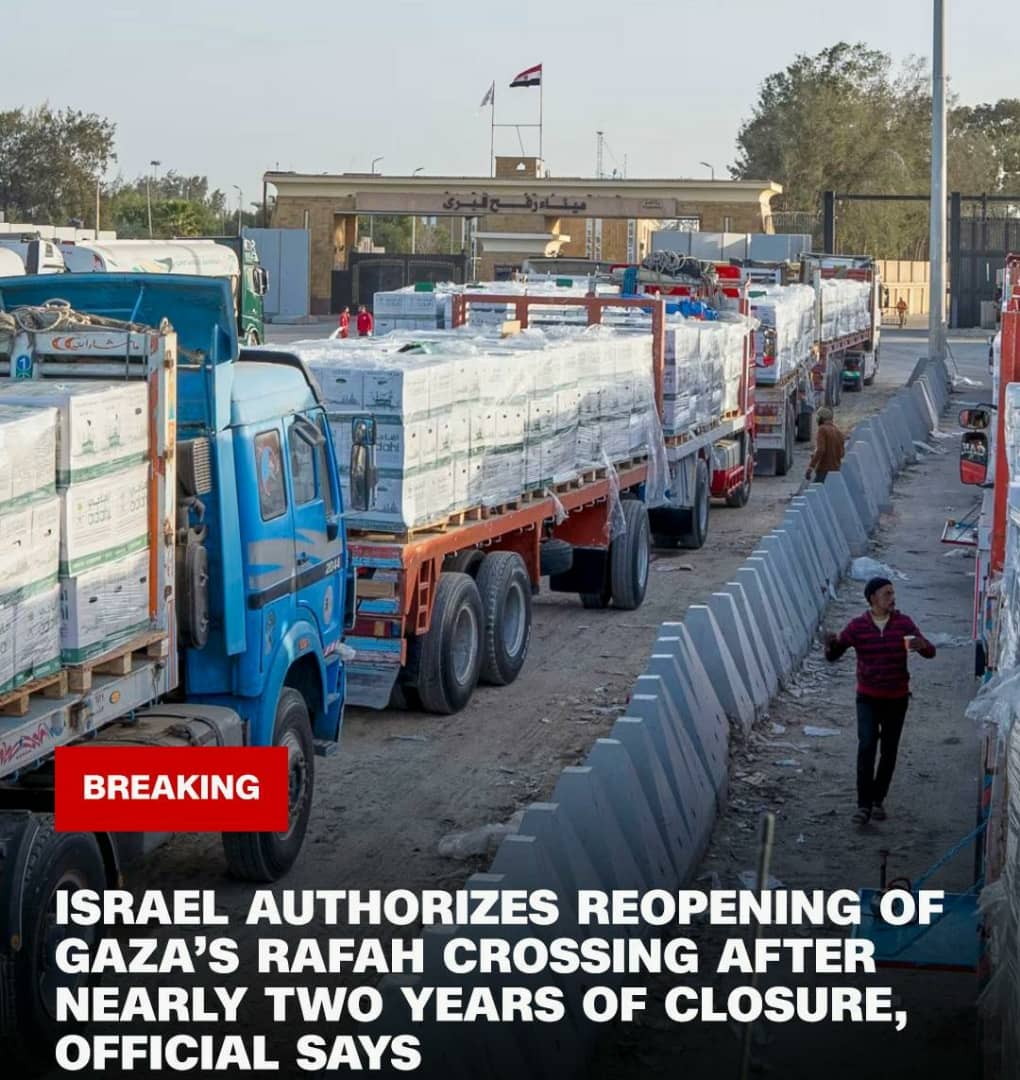
Israel Authorises Partial Reopening of the Rafah Crossing Between Gaza and Egypt
Jerusalem/Cairo (Feb 2, 2026) Israel has authorised the partial reopening of the Rafah crossing the only border crossing between the Gaza Strip and Egypt for the first time in nearly two years, according to an Israeli security official and multiple international reports. The move, part of the U.S.-brokered ceasefire agreement that took effect in October 2025, allows a small number of Palestinians to leave Gaza and even fewer to return after protracted closure linked to the war with Hamas. The European Union is overseeing operations at Rafah as the final component of the first phase of the ceasefire plan. The crossing was seized by Israeli forces in May 2024 and remained largely closed ever since, aside from limited evacuations for medical cases.
On the first day, only about 50 Palestinians per day are expected to cross in each direction departing Gaza and entering back through the crossing though other reports suggest the number allowed to leave may reach 150 daily initially, with fewer permitted
Entry and exit will be tightly controlled, requiring Israeli security approval and coordination with Egyptian authorities, with supervision by a European Union border mission.
Movement is for individuals only in this pilot phase; the entry of goods and large-scale humanitarian aid is not part of the initial reopening under current arrangements.
The crossing is expected to operate for limited hours initially about six hours per day emphasising pedestrian travel only and intense security checks. The crossing’s reopening has sparked cautious hope among Palestinians who have been cut off from family reunification, medical treatment abroad, and travel since its closure. Thousands of people especially those with urgent medical needs have been awaiting permission to leave the enclave, where health infrastructure remains devastated Egyptian hospitals in cities like Arish have been reportedly prepared to receive patients evacuated through Rafah, and ambulances were photographed lined up on the Egyptian side ahead of the reopening. The partial reopening is seen as a significant milestone in the Trump-brokered ceasefire plan, which halted major combat in Gaza in October 2025 and included provisions for:
Prisoner exchanges and release of hostages
Increased humanitarian access
Steps toward easing restrictions on movement through key crossings
The recovery of the final Israeli hostage’s remains was a key condition that cleared the way for advancing the Rafah reopening plan.
Despite this progress, violence continues intermittently, and broader concerns persist about Gaza’s dire humanitarian situation and long-term stability. Aid groups have repeatedly urged for greater access through Rafah and other crossings to deliver food, medicine, and essential supplies. Reopening the Rafah crossing marks the first substantive easing of Gaza’s isolation since the border was shuttered in 2024. The limited movement reflects security, political, and logistical complexities as parties test mechanisms for crossing operation.
For many Gazans, even minimal access offers critical prospects for medical care, family contact, or journeying to temporary refuge.