Severe Economic Mess Inherited In 2023
Severe Economic Mess Inherited in 2023
When President Bola Ahmed Tinubu took office in 2023, Nigeria’s economy was widely seen as near collapse with the central bank holding roughly $7 billion in obligations it couldn’t meet, foreign investors fleeing, extensive foreign‑exchange distortions, and a costly fuel subsidy that consumed billions of dollars in government revenue.
To address the crisis, Tinubu’s government implemented a broad set of painful macroeconomic reforms, including:
Abolishing the fuel subsidy that drained government coffers.
Floating the naira and ending the multi‑tier foreign‑exchange system.
Tightening monetary policy to curb inflation.
Security improvements in the Niger Delta to boost oil production.
Tax incentives to attract investment.
After inflation reached a near‑30‑year high of 34.8 % in December 2024, it fell sharply to 15.2 % by December 2025 a key victory attributed to tighter monetary policy and forex reforms.
The International Monetary Fund (IMF) projects Nigeria’s economy to expand by around 4.4 % in 2026, signalling renewed growth after years of stagnation. The naira has stabilised following earlier volatility, and foreign‑exchange reserves have climbed to their highest levels in seven years a key barometer of external stability that economists say is critical for investor confidence. Shell announced plans to move toward finalising a $20 billion offshore oilfield development in 2027.
ExxonMobil committed roughly $1.5 billion to deep‑water projects through 2027. Local businesses are also reporting optimism, particularly as onshore oil output increases thanks to improved security in the Niger Delta region a historical bottleneck for Nigerian production. With a relatively weaker naira and unification of FX rates, Nigeria’s non‑oil exports such as cocoa and cashew nuts are becoming more globally competitive, offering potential diversification beyond crude oil depended Ongoing changes to tax policy and collection frameworks are expected to strengthen government revenues in coming years providing fiscal space for infrastructure, social programmes, and debt service. Despite macroeconomic improvements, many Nigerians continue to face hardship: Poverty levels remain high after years of economic stress. Food and fuel prices rose sharply with subsidy removal eroding purchasing power for the poor and middle class. Real incomes have not kept pace with inflation and cost‑of‑living pressures. Although fuel subsidy savings have improved government finances, a large share of revenue still goes to servicing debt, limiting the state’s ability to invest in public services like healthcare, education, and infrastructure. According to The Economist, Nigeria’s economy may be turning a corner thanks to Tinubu’s reform agenda but benefits for ordinary citizens are likely to emerge only over time. Continued focus on investment, diversification, and social cushioning policies will be critical for translating macro gains into widespread economic wellbeing.When President Bola Ahmed Tinubu took office in 2023, Nigeria’s economy was widely seen as near collapse — with the central bank holding roughly $7 billion in obligations it couldn’t meet, foreign investors fleeing, extensive foreign‑exchange distortions, and a costly fuel subsidy that consumed billions of dollars in government revenue. To address the crisis, Tinubu’s government implemented a broad set of painful macroeconomic reforms, including:
Abolishing the fuel subsidy that drained government coffers.
Floating the naira and ending the multi‑tier foreign‑exchange system.
Tightening monetary policy to curb inflation.
Security improvements in the Niger Delta to boost oil production.
Tax incentives to attract investment. After inflation reached a near‑30‑year high of 34.8 % in December 2024, it fell sharply to 15.2 % by December 2025 a key victory attributed to tighter monetary policy and forex reforms. The International Monetary Fund (IMF) projects Nigeria’s economy to expand by around 4.4 % in 2026, signalling renewed growth after years of stagnation.
The naira has stabilised following earlier volatility, and foreign‑exchange reserves have climbed to their highest levels in seven years a key barometer of external stability that economists say is critical for investor confidence. Global energy firms are signalling renewed interest in Nigeria: Shell announced plans to move toward finalising a $20 billion offshore oilfield development in 2027.
ExxonMobil committed roughly $1.5 billion to deep‑water projects through 2027. Local businesses are also reporting optimism, particularly as onshore oil output increases thanks to improved security in the Niger Delta region a historical bottleneck for Nigerian production. With a relatively weaker naira and unification of FX rates, Nigeria’s non‑oil exports such as cocoa and cashew nuts are becoming more globally competitive, offering potential diversification beyond crude oil dependence. Ongoing changes to tax policy and collection frameworks are expected to strengthen government revenues in coming years providing fiscal space for infrastructure, social programmes, and debt service. Despite macroeconomic improvements, many Nigerians continue to face hardship:
Poverty levels remain high after years of economic stress.
Food and fuel prices rose sharply with subsidy removal eroding purchasing power for the poor and middle class.
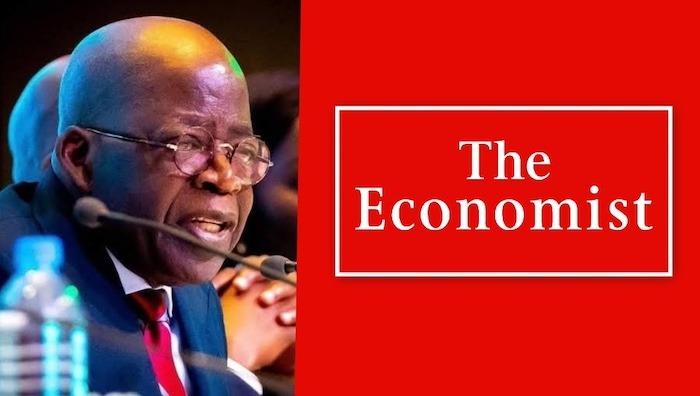
Real incomes have not kept pace with inflation and cost‑of‑living pressures. Although fuel subsidy savings have improved government finances, a large share of revenue still goes to servicing debt, limiting the state’s ability to invest in public services like healthcare, education, and infrastructure. According to The Economist, Nigeria’s economy may be turning a corner thanks to Tinubu’s reform agenda but benefits for ordinary citizens are likely to emerge only over time. Continued focus on investment, diversification, and social cushioning policies will be critical for translating macro gains into widespread economic wellbeing.