The UK Government Has Reaffirmed Its Refusal To Pay Compensation
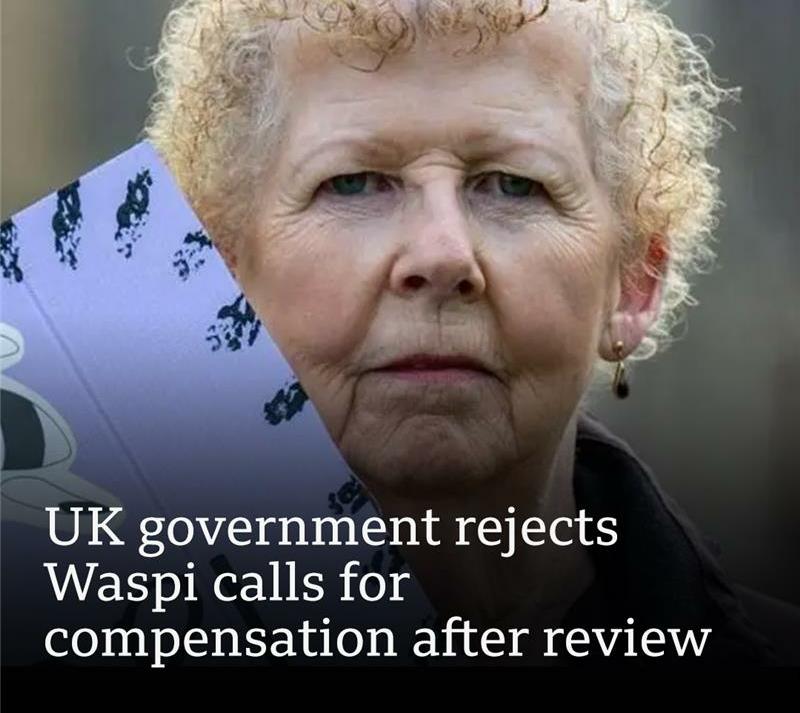
The UK government has reaffirmed its refusal to pay compensation to millions of women affected by historic changes to the state pension age, despite completing a fresh review of its earlier decision. The move has sparked anger from campaigners and opposition politicians.
Work and Pensions Secretary Pat McFadden told Parliament that, after reviewing new evidence, ministers have come to the same conclusion they reached in December 2024: no financial redress will be offered to women born in the 1950s impacted by the rise in state pension age.
Affected cohort: Around 3.6 – 3.8 million women born between April 1951 and 1960, often referred to as Waspi women (Women Against State Pension Inequality).
Issue: These women say they were not adequately informed about reforms that raised the state pension age originally from 60 to 65, and later up to 66 leaving many financially unprepared.
Reason for review: The government reopened the question after a previously overlooked 2007 document was rediscovered, prompting a reassessment of how communications about the changes were handled. Mr McFadden stressed the review focused only on how the changes were communicated, not on the broader fairness of the pension age policy itself. He said ministers accept that individual letters about the changes could and should have been sent earlier, but as a whole: A targeted compensation scheme to identify and pay only those who suffered injustice would be impractical to administer.
expressandstar. A flat‑rate compensation scheme could cost up to £10 billion and would see payments going to many who already had substantial notice through various public information channels.
expressandstar. The government argues the evidence shows the vast majority of women already knew their state pension age was increasing via broad public communications over several years.
Mr McFadden repeated an apology originally made by his predecessor that letters were not sent earlier, but said that the Parliamentary and Health Service Ombudsman’s finding that no “direct financial loss” resulted from the timing of those letters remains central to the government’s position. Campaigners and opposition figures have reacted strongly: Waspi chairwoman Angela Madden described the decision as showing “utter contempt” for women affected by the reforms. Critics argue the government is ignoring a significant injustice recognised by the Ombudsman’s earlier findings, which recommended compensation of up to about £2,950 per person.
expressandstar. Some MPs called the refusal to compensate a “punch in the stomach” for women whose retirement plans were disrupted.
Campaigners have hinted at legal action (judicial review) to challenge the government’s decision, arguing it still leaves a major wrong unaddressed. The controversy stems from reforms first legislated in the 1995 Pensions Act, which aimed to equalise state pension age for men and women. Implementation of these changes was sped up in 2011, cutting down the notice period for many women to prepare for later retirement a key point of dispute for the Waspi campaign.
In March 2025, the Parliamentary and Health Service Ombudsman concluded there was maladministration in how the changes were communicated and suggested compensation could be appropriate a conclusion the government has now rejected.